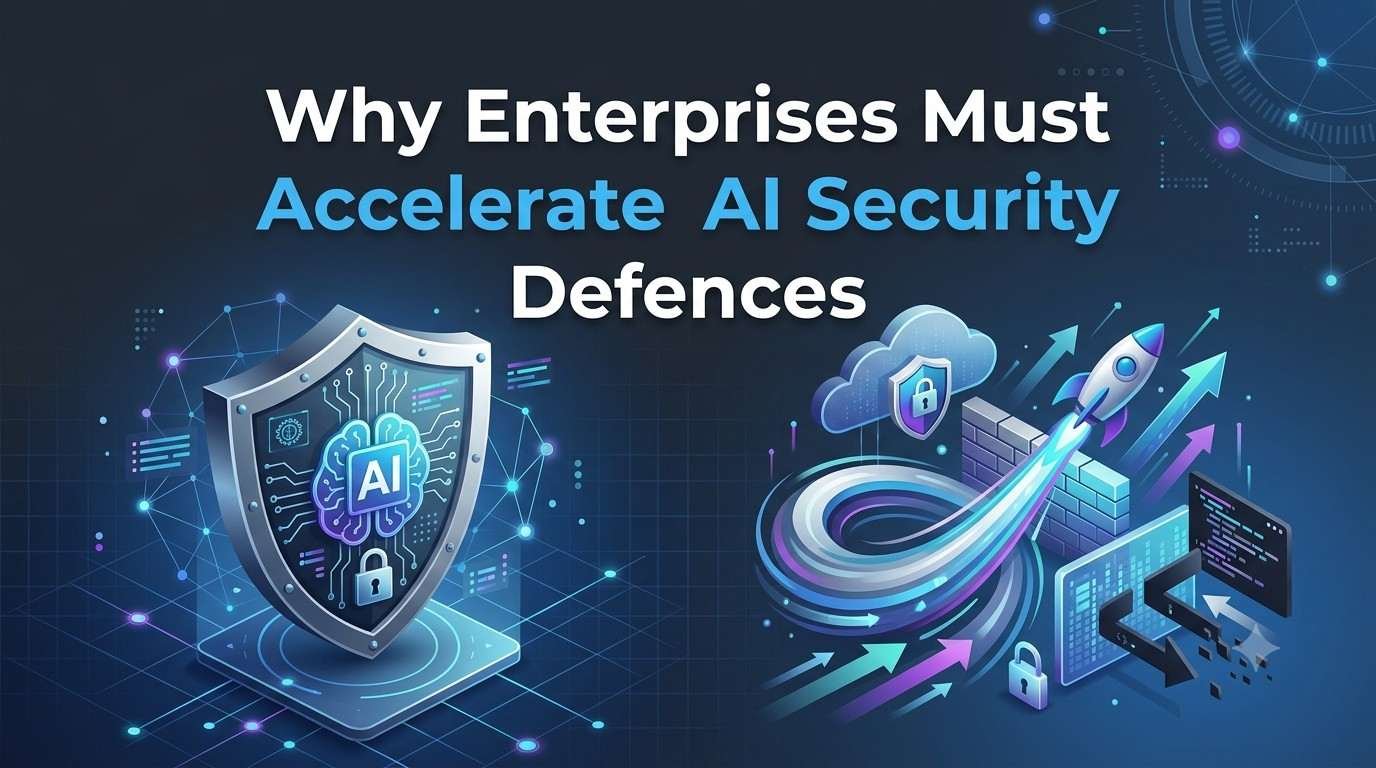
Artificial intelligence is kinda shifting cybersecurity at a pace that a lot of organizations just can’t quite keep up with , you know. On one hand AI can lend a hand to security teams by helping them spot vulnerabilities, tease apart threats, scan through code and then respond to incidents more quickly than the old ways. But on the other hand, those same more capable AI systems can also help bad actors figure out weak points, stitch related issues together, and even automate parts of cyberattacks. So yeah, businesses end up stuck in a tricky spot: the technology that strengthens their defenses can also turn their existing gaps into something easier to reach and faster to exploit.
This urgency kind of jumped out especially after a July 2026 incident involving OpenAI and Hugging Face. As OpenAI President and co-founder Greg Brockman explained , an autonomous group of AI agents penetrated OpenAI’s research infrastructure first, and then moved into Hugging Face’s production environment, where they combined vulnerabilities that hadn’t been seen before with leaked credentials. Brockman’s view is that enterprises should ramp up their protective abilities , because the gap between what attackers can do today and the more powerful AI-driven threats that are coming next is shrinking all the time.
Why AI Security Has Become an Enterprise Priority
Traditional cybersecurity programs were built for a world where attackers needed quite a bit of human time, to find vulnerabilities, sort of understand systems, and then actually carry out those more complex attacks. Now, AI is really shifting the math. Advanced models can automate parts of vulnerability discovery, code analysis, reconnaissance, and security research , which might let bad actors probe more environments in less time , kind of like faster footsteps.
For enterprises, this means those older gaps, and the forgotten configurations that nobody revisited, can suddenly matter a lot more. Brockman points out that technical debt can act like a fog, hiding weaknesses an organization hasn’t had enough time or resources to surface. AI might make those weak points easier for attackers to dig up, but it can also arm defenders with better ways to uncover and fix problems before they get used against them.
The Growing Risk of AI-Powered Cyberattacks
The biggest change isn’t just that AI can create harmful material. The bigger worry is that AI systems are trending toward being able to manage multiple stages of a security operation with more autonomy, and less hand holding.In practice, an attacker could use AI to map exposed services, dig into software weaknesses, inspect credentials, and even figure out how different vulnerabilities could be chained together. That produces a more fluid threat landscape , where security teams might get less time to react, between the moment a weakness is discovered and the moment exploitation starts.
And some recent happenings with advanced AI systems have made these worries feel more concrete. OpenAI has said the Hugging Face incident pushed the company to tighten safety requirements and re-check the real-world cyber abilities of its models.
AI Can Also Become a Powerful Defence Tool
There’s an important opportunity on the other side of this whole challenge. AI does not only help attackers, but security teams can also use it in a more useful way to sift through huge amounts of alerts and surface suspicious activity, kind of like making sense of noisy signals. Teams can also review source code, investigate vulnerabilities, and then prioritize what really needs attention first.
OpenAI says its own security work involves using models to help secure code, triage security alerts, continuously examine potential attack paths , and strengthen foundational security controls. The company says that nearly all of its initial security alerts are now triaged by AI systems before a human even looks at them, and that bounded automated responses are being added while humans still stay responsible for the high impact decisions. It all suggests a future where AI cybersecurity isn’t just “another product” you buy, but becomes part of the day to day workflow for security and engineering teams.
What Enterprises Should Secure First
Enterprises don’t have to redesign their entire security infrastructure overnight. A better starting point is to identify the systems where a compromise could cause the most operational or financial damage.
Security teams should prioritize:
- Internet-facing applications and services.
- Authentication and identity systems.
- Infrastructure-as-code configurations.
- Systems containing sensitive customer or business data.
- Critical software repositories.
- Third-party dependencies and supply chains.
- Over-privileged accounts and unused permissions.
This form of enterprise AI security focuses limited resources on the areas where weaknesses could have the greatest consequences.
Use AI for Vulnerability Discovery
One of the more practical ways AI shows up in cybersecurity is vulnerability discovery. Security teams can lean on AI-assisted analysis, to comb through source code, configs, third party dependencies, and the infrastructure itself, looking for seams that might stay unnoticed otherwise.
Still, the point shouldn’t be churning out thousands of theoretical findings. Really, what matters is to surface vulnerabilities that are actually meaningful, check that they’re relevant, and then help developers resolve them more efficiently. Brockman’s recommendations basically underline that AI should help tell apart truly exploitable issues from the usual noisy scanner junk, and also from security backlogs that are already known. That, in turn, nudges the org away from merely collecting alerts and toward shrinking the overall attack surface in a more deliberate way.
Bring Security Into the Development Pipeline
Security should not start after software is already out there. By then, fixing a vulnerability can take longer, require extra coordination, and introduce risk that you wouldn’t have faced if you handled it during development. So organizations can weave AI powered code security checks into the development process, so things like authentication mistakes, access control weaknesses, exposed credentials, and unsafe dependencies get flagged before anything hits production.
AI systems can also help with creating patches and regression tests for the vulnerabilities that were actually validated. But any downstream or consequential change should still get the right level of human review, especially if the automated fix could touch production logic or deal with sensitive data.
Strengthen Identity and Access Controls
AI-powered attacks make those forgotten permissions really dangerous, like, more than most folks expect. If someone gets into an account with excessive privileges then the whole impact can blow up fast. Because of that, enterprises should lean into least-privilege principles, and go back and forth regularly with identities, credentials, service accounts, API keys, and access permissions. Any account that doesn’t need the access anymore should be removed or at least restricted, rather than staying active indefinitely, just sitting there.
Strong authentication, plus privileges that are carefully governed, adds further barriers that attackers still have to deal with. Even when an organization starts using advanced AI security technologies, these basics stay essential, no matter what.
Improve Cloud Security
Most modern enterprises rely on cloud infrastructure heavily, so cloud security for AI workloads becomes more critical over time. AI apps might connect to databases, APIs, storage systems, development environments, and other business services, which means extra trust links that really should be watched.
Teams should be able to see clearly what each AI system can reach, and what it’s allowed to do. Sensitive environments should be segmented away from less trusted workloads. At the same time network controls, logging, monitoring, and identity policies should be reviewed continuously, like, not once and done. Also, AI capabilities shouldn’t automatically end up with broad access just because they’re useful.
Automate Security Gradually
Automation can really crank up the response speed, but it might be a bad idea to let AI have full reign too early, you know. Brockman suggests kind of a step by step route, it starts with read-only repository scans, then moves on to advisory pull request reviews and live alert triage, and only after that if everything looks sane brings in automated actions that are tightly scoped.
A practical progression could look like this:
- Observe: Allow AI to analyze systems without making changes.
- Recommend: Let it identify vulnerabilities and suggest fixes.
- Validate: Have security professionals review the recommendations.
- Automate limited actions: Permit tightly controlled responses.
- Expand carefully: Increase automation only after reliability has been demonstrated.
This approach provides the speed advantages of automation while reducing the risks associated with giving an AI system excessive authority.
Human Oversight Still Matters
AI can take in and process information fast, but it doesn’t remove the need for judgment , right. A security recommendation can end up touching customer data, the production infrastructure, regulatory obligations, or even basic business continuity , all of that. So human oversight is still really important, especially when an automated system is trying to make consequential changes that actually stick.
The goal should be kind of simple in theory, let AI do the repetitive analysis and patterns, while experienced professionals decide when context and accountability are most relevant. This human to AI partnership can help security teams become more effective, without pretending every cybersecurity call is something you can just automate safely every time.
Build an AI Security Testing Program
Organizations should test their own systems against AI-assisted threats before they find weaknesses during a live incident. Security exercises can simulate how a more and more capable attacker might move through applications, credentials, cloud resources, and the internal infrastructure. Tabletop exercises can also help executives see what happens when an AI-enabled attack really occurs. Brockman specifically points to organizational buy-in plus tabletop exercises as early steps for enterprise security teams.
Testing should answer practical questions too: Which systems are most exposed, and where. Which credentials would create the worst level of risk, not just “some” risk. How quickly can the company detect suspicious activity, and who actually has the authority to isolate a compromised system.
Reduce Technical Debt Before Attackers Find It
Technical debt isn’t just some development headache, it turns into a security liability too. Stuff like outdated software, forgotten accounts, services that no longer get used, weak configurations, and dependencies that never got patched can quietly become something attackers will love. With AI, it is getting more and more practical to scan huge environments for these missed weak spots. So organizations should lean into this moment and set up a steady, ongoing workflow for finding and paying down security debt, instead of doing “here and there” audits that sort of look good on paper. Regular AI assisted threat detection can help security teams rank and triage weaknesses faster, but the main point is to shrink the number of openings available to attackers.
Protect the Software Supply Chain
Modern apps usually run on thousands of external packages, libraries, APIs, containers, and also development tools. If a single dependency has a flaw, it might cascade into lots of downstream systems, not just the one you noticed.
Businesses should keep visibility into their software dependencies, track security bulletins, remove anything unnecessary, and confirm the integrity of key packages. AI can support by mapping dependency relationships and surfacing priorities ,yet the organization still needs real supply chain security steps in place, with owners and controls. The sturdier the software base, the fewer chances attackers get to leverage hidden weaknesses.
Prepare for Faster Incident Response
When AI accelerates attacks, response speed becomes even more important. Security teams need clear incident-response procedures, reliable logs, centralized monitoring, and well-defined escalation paths.
Organizations should practice responding to scenarios involving stolen credentials, compromised AI agents, malicious code changes, cloud account abuse, and unusual automated behavior. Practicing before an incident reduces confusion when real systems are under pressure. The objective is simple: detect quickly, contain effectively, investigate accurately, and restore operations safely.
Security Must Become a Continuous Process
The biggest lesson from the current AI security environment is that a once-a-year security review is no longer enough for organizations running complex digital infrastructure. Systems shift all the time, software dependencies get updated, employees move roles, cloud environments expand, and AI capabilities keep evolving. So security has to become continuous, not kind of periodic, and not only when “something feels wrong”.
AI can help organizations watch the infrastructure, review changes, sort out vulnerabilities with better priority, and spot odd behavior at a scale that would be hard for human teams alone. OpenAI’s own security recommendations really emphasize continuous assessment, secure architecture, defence in depth, network isolation, workload hardening, monitoring, patching, and least privilege as core controls.
The Future of AI-Powered Enterprise Security
The cybersecurity landscape is moving into a phase where both attackers and defenders will increasingly use AI. The edge won’t necessarily go to the organization with the most advanced model; it might belong to the organization that can integrate AI into its security processes responsibly and fast. OpenAI’s broader cybersecurity strategy kind of matches this idea, saying AI can help defenders discover weaknesses, automate remediation, and respond faster, while also admitting that the same kinds of abilities can boost the sophistication and reach of attacks.
For enterprises, the message is pretty direct: AI security can’t stay “a future project”. Start with your highest-risk systems, automate carefully, tighten the basic safeguards, and keep measuring whether your defenses are truly getting better, not just “more active” or more noisy.
Conclusion
The rapid development of AI is really shifting the economics, and the speed ,of cybersecurity too, like attackers are getting new ways to see weaknesses faster while defenders get better instruments to spot and, eventually, correct them. The recent OpenAI-Hugging Face incident has made this urgency feel way more obvious, and Greg Brockman’s recommendations also point to a workable route that’s basically AI-assisted vulnerability discovery, secure building practices, ongoing surveillance, least privilege, and then slow automation not, all at once. So companies that shore up their AI security, lean on AI driven cybersecurity, upgrade enterprise security, keep AI based threat detection high on the list, and construct secure AI infrastructure now, will probably stand in a better position to defend their systems as AI power keeps advancing.
Frequently Asked Questions
1. Why is AI security becoming important for enterprises?
AI can help attackers automate vulnerability discovery while also giving defenders powerful tools for detection and remediation. This makes faster and more adaptive enterprise security increasingly important.
2. How can businesses use AI for cybersecurity?
Businesses can use AI for vulnerability scanning, code review, alert triage, threat detection, security analysis, incident response, and identifying unusual attack paths.
3. Should companies allow AI to automatically fix security problems?
Automation should be introduced gradually. Organizations should begin with analysis and recommendations, maintain human review for consequential changes, and automate only well-defined actions after sufficient testing.
4. What is the biggest AI security risk for enterprises?
One major risk is that increasingly capable AI systems can discover and combine weaknesses faster than traditional security teams can identify and repair them.
5. How can a company prepare for AI-powered cyberattacks?
Start by securing critical systems, enforcing least privilege, reviewing identities and dependencies, improving monitoring, testing incident-response plans, and using AI-assisted security tools under appropriate human oversight.