Lots of people spend years running after milestones, yet somehow never feel fully content. Sure, a better role, more money, stronger acknowledgement, or even a more crowded social calendar can feel good for a bit, but it doesn’t always answer that deeper nagging question: What makes life meaningful to me? And once daily duties start to feel repetitive, and your own priorities get kinda squeezed out, it gets tricky to see what direction actually fits, you know.
That’s where Ikigai comes in with a different viewpoint. It’s often rendered as “a reason for being” or “the thing that makes life worth it,” and Ikigai nudges you to look for meaning through regular moments—your activities, the people you keep close, your interests, what you can give back, and the beliefs you live by. It’s not some magical recipe for happiness, and it’s definitely not a promised outcome for a longer life. Still, it can act like a practical way to think through your life purpose, meaningful work, and a steadier, more deliberate way of living.
What Is Ikigai?
Ikigai is a Japanese idea , kind of tied to having something that gives you life more meaning, motivation maybe, or just a quiet sense of purpose. The term sort of comes from iki , which is “life”, and gai , which is “value” or “worth”. Even though this view has strong cultural roots in Japan, it has spread quite a lot worldwide, as a way for people to think over personal satisfaction, and what really fits.
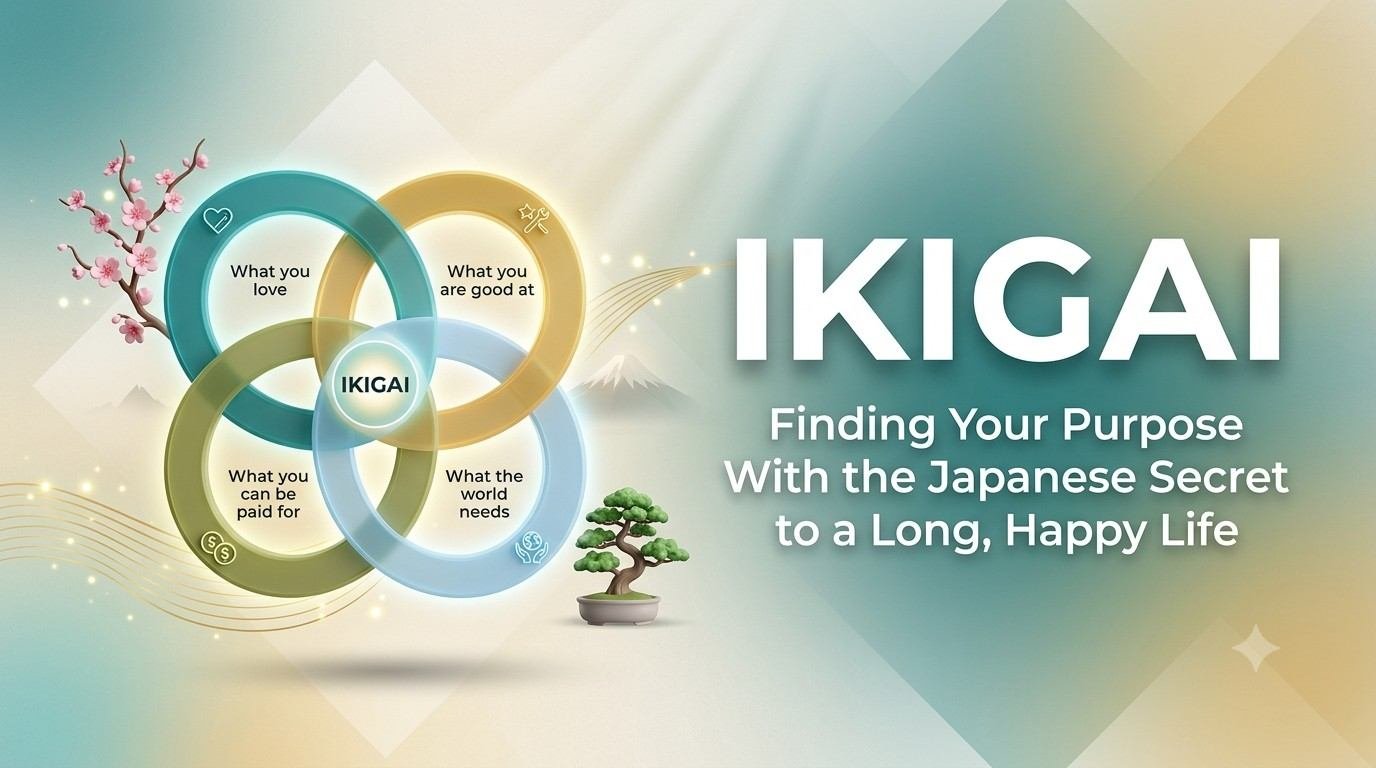
Modern discussions often represent Ikigai using four overlapping questions:
- What do you love?
- What are you good at?
- What does the world need?
- What can you be paid for?
This popular diagram can help as a reflection tool, but it’s important to grasp that this four-circle model is a modern interpretation, not a full depiction of the traditional Japanese concept.
Ikigai Is More Than Finding Your Dream Career
One common misunderstanding is that Ikigai is just about finding that perfect profession, and honestly people kinda stick to that idea. But traditional notions around Ikigai usually come from pretty regular, even almost simple sources of meaning like relationships, hobbies, community involvement, craftsmanship, routines, and day to day responsibilities, know.
And your Ikigai doesn’t always have to turn into some sort of business. A person might feel it through teaching, gardening, raising children, making art, helping neighbors, practicing a skill, or even just tending to meaningful relationships. That’s why Ikigai works with meaningful living instead of only career planning, and yeah, that shift can feel small… but it matters more than it sounds.
Why Purpose Matters in Everyday Life
Having a sense of purpose can color how people face challenges and daily responsibilities. When people know why something matters to them, the routine things can feel more tied to their bigger values. Purpose can also help people decide when several choices want their attention, all at once, like a little crowd.
For example, someone who values creativity might protect time for writing even when work gets demanding. Someone who values helping others may pick a career, or simply a volunteer role that lets them contribute in a real way. Purpose gives those everyday decisions a clear kind of direction, rather than just letting them drift.
The Four Questions of the Popular Ikigai Framework
The modern Ikigai framework can be used as kind of a structured self-reflection thingy. You don’t have to answer all four questions right away, it’s more like you can return to them slowly. The point is to see patterns between what pulls your attention, what you can do with growing confidence, how you might contribute, and what you practically need in your everyday life.
1. What do you love?
Try to notice the activities that naturally hook your focus. Those might be hobbies, topics, casual conversations, creative work, or even certain problems you like to explore, just because.
Don’t lock yourself only into things you’re already very good at. Something can still be meaningful, even if you’re still learning it . Writing, cooking, photography, technology, teaching, traveling, gardening, or helping people can all show clues about your interests, in a quiet way.
2. What are you good at?
The next question is more about your strengths. Think about the skills you’ve developed through school, work, hobbies, or just life experience.
You can ask:
- What do people regularly ask me to help with?
- Which tasks feel easier to me than they do to others?
- What skills have I developed over time?
- What accomplishments am I genuinely proud of?
Knowing what you’re good at can actually lead to personal growth and a clearer purpose, because it lets you see where you can make real value, even if it’s subtle at first. And honestly, once you notice that pattern, it’s easier to move forward in a more intentional way, you know.
3. So, What Does the World Need?
Purpose feels a lot stronger when it’s tied to contribution. Take a moment and think about the issues you actually care to tackle, or the people you’d like to support. And when it says “world,” it doesn’t have to be the entire society, not really. It might be your family, your workplace, your local community, customers, students, or even that small group you already interact with. Then ask yourself, what kind of helpful difference you want your efforts to create, day by day.
4. What Can You Get Paid For?
Practical stuff matters. Financial stability is a major part of modern life, and meaningful work doesn’t have to pretend that money doesn’t exist. Look at which skills or interests could bring in income. But don’t fall into the trap of thinking your Ikigai has to blend passion and pay perfectly. A pastime can stay a pastime, while your job covers stability, and something else something quieter, maybe still brings the deeper meaning.
How to Find Your Ikigai Step by Step
Finding purpose is rarely a single moment of discovery. It is usually an ongoing process of experimenting, reflecting, learning, and adjusting.
Start With Your Everyday Life
Before making major changes, examine your current routine.
- Which activities make you feel energized?
- Which ones consistently drain you?
- Which conversations do you enjoy?
- Which responsibilities feel meaningful even when they are difficult?
These observations can reveal patterns that are easy to overlook when life becomes too busy.
Make a Personal Meaning List
Write down activities and experiences that have made you feel useful, engaged, curious, connected, or satisfied. Do not judge the list while creating it.
You might include:
- Teaching someone a skill.
- Solving a difficult problem.
- Creating something.
- Spending time with family.
- Helping someone through a challenge.
- Learning something new.
- Working on a meaningful project.
Once you’ve put the list together, try to notice recurring vibes or themes. Basically, you’re looking for patterns, then those patterns might help you nudge toward figuring out what your purpose is. Not all at once, obviously, but little by little.
Figure out your Core Values
Your purpose often feels more real when you know what you actually value. Some people lean toward freedom and independence, while other folks seem drawn to security, creativity, achievement, relationships, service, learning, or community.
Those values will quietly steer what choices feel right. Like, a job can look impressive on the outside, but it can still feel off, if it goes against your own priorities. So take a bit of time and sort through it try picking five values that matter most to you, then ask yourself if your current day to day life matches them.
Match Your Strengths to your Interests
Purpose can also get easier to explore when your interest overlaps with your skill. Imagine you like explaining complicated ideas, and you also have strong communication abilities. In that case, you might explore teaching, writing, consulting, training, content creation, or mentoring. But if you’re into technology and you enjoy solving practical problems, you could look at software, digital education, product development, or technical support.
And here’s the key point, it’s not about locking in one career right away. It’s more like spotting a handful of possibilities that feel interesting enough to investigate, kinda like a map you’re testing, not a final destination.
Experiment Before Making Major Changes
You do not need to quit your job or completely change your life to explore Ikigai. Small experiments can provide useful evidence.
- If you think you may enjoy teaching, volunteer to teach a workshop.
- If you are interested in writing, publish a few articles.
- If you enjoy helping entrepreneurs, mentor someone.
- If you are curious about gardening, start with a small home project.
These experiments help turn purpose driven living ,from this abstract idea into something you can actually feel, experience. Like, not just “think about it” but really, be in it.
Build Meaning Through Small Daily Actions
Purpose doesn’t always need some dramatic life move. Small things, done steady and on purpose, can build a much larger sense of meaning. For instance you might spend like 20 minutes learning something that matters to you , or call someone you care about. You could work on a creative project, exercise, volunteer, or just sit with a cup of time and do something intentionally, not on autopilot. Individually they can seem sort of minor, but over time, those same choices start changing how your days feel.
The Role of Relationships in Ikigai
Meaning isn’t always something you chase alone. Relationships can be a big wellspring of purpose, because people often find deep fulfillment through connection, responsibility, encouragement and just… belonging. Good relationships can act like emotional support when things get hard , and they also open doors to contribute to other people’s lives, in real ways.
So make time for meaningful conversations and shared activities, instead of letting digital communication replace genuine contact. A fulfilling life usually involves more than just asking “What do I want?” it also asks “Who do I want to contribute to ?”
Ikigai and the Idea of Longevity
Ikigai is pretty often sold as this Japanese little secret for living longer , mostly because people talk a lot about long lived communities in Japan, especially Okinawa. Still, it is kinda misleading to say, like, Ikigai by itself is what makes people live longer. Longevity is tied to a bunch of things , not just one idea. Genetics matters, healthcare matters, physical activity , nutrition, and social ties too. Then there is environment, socioeconomic conditions, and the whole daily lifestyle routine. Some studies have looked at connections between having a sense of purpose and certain health outcomes, but a connection is not the same as proof. In other words, it doesn’t really show that Ikigai directly causes a longer life, even if it sounds like it should. A more grounded takeaway might be this , meaningful aims plus steady social bonds may support a healthier and more fulfilling way of living, rather than acting like a single magic cause.
Create a Purposeful Morning Routine
A morning routine does not need to be complicated. Instead of copying an influencer’s schedule, create a routine that reflects your priorities.
You might begin with:
- A few minutes of quiet reflection.
- Light physical activity.
- Reading.
- Planning your most important task.
- Journaling.
- Time without unnecessary notifications.
A purposeful daily routine should support your values rather than become another productivity competition.
Avoid the Pressure to “Find Your One Purpose”
One of the biggest problems with modern purpose culture is the belief that everyone has one perfect calling waiting to be discovered.
- Real life is more complicated.
- Your interests can change.
- Your responsibilities can change.
- Your strengths can develop.
- Your priorities can evolve.
The purpose that feels meaningful in your twenties may not be the same one you value later in life. Instead of searching for one permanent answer, think of Ikigai as an ongoing process of self-discovery and personal fulfillment.
Ikigai and Work-Life Balance
Work can be an important source of meaning, but it should not necessarily become your entire identity. When every aspect of life revolves around career achievement, burnout can become more likely. A healthier approach is to create several sources of meaning.
Your work may provide financial stability.
Your relationships may provide connection.
Your hobbies may provide creativity.
Your community may provide contribution.
Your learning may provide intellectual stimulation. Together, these areas can create a more balanced life.
How to Use Ikigai When You Feel Lost
Feeling uncertain about your future does not mean you have failed. Instead, treat uncertainty as information. Start by asking what currently feels missing.
Is it creativity?
Connection?
Challenge?
Freedom?
Contribution?
Learning?
Once you identify the missing element, experiment with ways to introduce more of it into your life. This approach can make living with intention more practical because you are responding to real experiences rather than trying to discover an abstract perfect answer.
Common Ikigai Mistakes to Avoid
The concept becomes less useful when it is treated as a rigid formula.
Avoid these common mistakes:
- Believing Ikigai must become your career.
- Expecting one exercise to reveal your purpose.
- Comparing your purpose with someone else’s.
- Ignoring financial realities.
- Treating hobbies as less valuable than careers.
- Assuming purpose never changes.
- Chasing productivity instead of meaning.
Ikigai should encourage reflection, not create another standard you feel pressured to achieve.
A Simple Ikigai Exercise
Take a notebook and divide a page into four sections.
Write down:
What I Enjoy: Activities that energize or interest me.
What I Do Well: Skills and strengths developed through experience.
Where I Can Contribute: People, problems, or causes I care about.
What Is Practical: Skills or activities that could support my lifestyle financially or otherwise.
Then look for overlaps.
You may discover a possible career direction, a new hobby, a volunteering opportunity, or simply a better understanding of what makes your current life meaningful. The goal is insight, not a perfect answer.
Conclusion
Ikigai kinda offers this thoughtful way to look at purpose, meaning, contribution, relationships, and the little everyday satisfactions, and it doesn’t really need huge dramatic changes in your life. Also, that four-question framework people talk about, it’s more like a modern interpretation rather than the whole traditional Japanese concept, still it can be handy for more structured self reflection. Instead of trying to hunt down one “perfect calling”, maybe treat Ikigai like an ongoing pathway of learning what you really value, improving your strengths , helping people in your own way, and building small meaningful daily moments. Honestly, a purposeful life is rarely made from one big decision, it usually grows from those small choices you keep making, again and again over time.
Frequently Asked Questions
1. What does Ikigai mean?
Ikigai is a Japanese concept generally associated with having something that gives life meaning, value, or a reason for getting up each day.
2. Is Ikigai only about finding a career?
No. Ikigai can involve relationships, hobbies, community, learning, responsibilities, work, and other activities that make life feel meaningful.
3. How can I find my Ikigai?
Reflect on what you enjoy, what you are good at, how you can contribute, and what is practical for your circumstances. Then test your ideas through small real-world experiments.
4. Does Ikigai guarantee a longer life?
No. There is no evidence that discovering Ikigai alone guarantees longevity. Health, genetics, environment, healthcare, lifestyle, and social factors all influence lifespan.
5. Can your Ikigai change over time?
Yes. Your interests, responsibilities, relationships, skills, and values can evolve, so your sources of meaning may change throughout different stages of life.