Picking a really solid non-fiction book can feel weirdly hard. Sure, fiction kinda yanks you into some other universe, but non-fiction makes you decide what you actually want to get better at understanding—yourself, society, history, science, money, technology, or those folks who shaped the world around you. And since there are hundreds of new releases landing every year, you can end up stacking dozens of titles on a reading list and still not have a clue where to start. Honestly, the problem grows again when you want more than “interesting”, you want books that are useful, credible, and actually stick in your head.
The good news is, the best non-fiction books 2026 cover this unusually wide range of topics. Right now, reader led lists are pointing to Patrick Radden Keefe’s London Falling, Lauren Hough’s Monster of a Land, Michael Pollan’s A World Appears, and Ian Buruma’s Stay Alive: Berlin, 1939–1945. At the same time, audiobook charts keep suggesting plenty of practical favorites like The Let Them Theory, Atomic Habits, and The Psychology of Money. So if you’re trying to get a grip on history, improve your everyday habits, explore human conduct , or just settle down with a genuinely gripping true account, 2026 has a lot of choices that feel worth your time.
Why Read Non-Fiction in 2026?
Non-fiction gives you a sorta different reading experience since it links straight to the actual world, you know. With a good book you can get pulled into a historical period, or it can unpack a scientific idea, show the way someone moved past hardship, and sometimes it even bumps into beliefs you have had for years. It’s like the subject matter stays close, almost familiar, not just a made up situation.
The best titles can help you:
- Learn from other people’s experiences.
- Understand complicated subjects more clearly.
- Develop better habits and decisions.
- Explore history and culture.
- Improve critical thinking.
- Discover perspectives outside your own experience.
The important part is not to read non-fiction just because it’s kinda labeled “educational.” Pick topics that make you genuinely curious, like the kind of curiosity that keeps nudging you along. Curiosity is often a way better reason to stick with a book to the end than sheer obligation.
1. London Falling by Patrick Radden Keefe
Best for readers who love investigative history
One of the more prominent 2026 non-fiction titles on Goodreads right now is London Falling: A Mysterious Death in a Gilded City and a Family’s Search for Truth by Patrick Radden Keefe. The book is sitting right at the top of Goodreads user-generated 2026 non-fiction list, and it has an average rating above 4.3, based on tens of thousands of ratings.
Keefe is usually a deeply reported narrative non-fiction author, and in this one he mixes an investigation with family history. It doesn’t quite lay everything out as a dry timeline. Instead, the book turns a genuine mystery into something that keeps unfolding through people, evidence, relationships, and all those unanswered questions that linger. If you’re hunting for investigative nonfiction books, this feels like a really solid pick, because it shows how research and storytelling can move together, almost like they share the same breath, even when the answers still refuse to arrive.
Best for: Readers interested in mysteries, journalism, family history, and true stories.
2. A World Appears by Michael Pollan
Best for psychology and consciousness
Michael Pollan’s A World Appears: A Journey into Consciousness sort of tackles one of those hard questions people have been asking for centuries, like what exactly is consciousness and how does our lived sense of reality get built up, or appear. The book shows up in Goodreads’ 2026 non-fiction listings and it’s already pulled in a lot of reader attention. Pollan comes at it through his longer running curiosity about consciousness, science, psychology and altered states of experience, so it feels like a pretty solid pick if you’re into books on perception, mind, and that kind of mental terrain. And it doesn’t just toss out one easy answer, not really. Instead it kind of nudges you to sit with the way perception, brain activity, experience itself, and even our ideas of reality connect together, and keep bumping into each other, until you’re thinking about it in a more tangled, reflective way.
Best for: Psychology enthusiasts, science readers, and people curious about consciousness.
3. Stay Alive: Berlin, 1939–1945 by Ian Buruma
Best for history lovers
History gets much more meaningful once it sort of slips past just dates and famous names. Stay Alive: Berlin, 1939–1945 by Ian Buruma takes a closer look at life in Berlin during the Second World War, especially the day to day reality of people who had to live through one of the darkest chapters of modern history . The title shows up among the notable 2026 non-fiction books on Goodreads, with a reader rating sitting above 4.2 at the moment of this current listing.
Books like this matter because history isn’t only about what governments and armies did. It’s also about how ordinary people had to carry fear, uncertainty, the basics of staying alive, propaganda, grief, and the constant shifting of social life, all of it overlapping in ways you don’t really see in the headline version.
Best for: Readers interested in World War II, European history, and narrative historical non-fiction.
4. Everything Is Tuberculosis by John Green
Best for science and global health
John Green’s Everything Is Tuberculosis: The History and Persistence of Our Deadliest Infection has turned into one of those most visible non-fiction picks in Goodreads’ 2026 reading circles. It also shows up right near the top of Goodreads’ 2026 non-fiction challenge list, with an average rating sitting above 4.3 and hundreds of thousands of ratings, basically like people can’t stop talking about it.
What makes the book stand out is how it makes science writing feel… deeply human. Rather than handling tuberculosis like it’s only a medical subject, Green digs into its history, and sticks around, while tying the disease to real people, inequality, public health, and wider society. If you are looking for science nonfiction books to read, this feels like a very approachable option, because it connects factual details with a bigger, more lived-in human story.
Best for: Science readers, health-history enthusiasts, and anyone interested in global public health.
5. Monster of a Land by Lauren Hough
Best for memoir and social commentary
Lauren Hough’s Monster of a Land: On the Road in Search of Modern America comes off as more personal than most non-fiction, at least in the way it moves through scenes and thoughts. Right now Goodreads has it sitting among the leading 2026 non-fiction picks, and the reader rating is roughly 4.3, which feels telling.
What the book does is mix travel, close observation, lived experience, and that steady commentary on contemporary America. This blend of road-trip memoir plus social analysis can be really hard to put down, because she’s not only talking about something from afar. Instead the whole trip, the route itself kind of turns into part of the inquiry. And that’s a nice reminder that non-fiction doesn’t have to stay detached , it can be intimate while still reaching outward toward bigger questions of society and identity, somehow all at once.
Best for: Memoir readers, travel enthusiasts, and people interested in American culture.
6. Judy Blume: A Life by Mark Oppenheimer
Best for biography lovers
Biographies can be kind of fascinating, because they show how a person’s private experiences, professional decisions, relationships, and the general cultural environment sort of mix together, and then slowly shape the whole life. Like, Judy Blume: A Life by Mark Oppenheimer is one of those high ranked 2026 non-fiction picks on Goodreads, which makes me want to click right away.
Judy Blume’s cultural footprint makes her life even more interesting to dig into. Her books became really important to multiple generations of young readers, mostly because they touched on topics that were too often ignored in children’s and young-adult literature. So a good biography, it doesn’t only tell you what happened to a famous writer. It can also show how one individual mirrors culture and at the same time helps steer it, like indirectly but powerfully.
Best for: Biography readers, literary enthusiasts, and readers interested in publishing and culture.
7. Servus: How Slavery Made the Roman World by Emma Southon
Best for ancient history
If you want to step a lot further back in time, Emma Southon’s Servus: How Slavery Made the Roman World kinda offers a detailed look at slavery and how it sat inside ancient Rome. The book shows up among Goodreads’ notable 2026 non-fiction titles, which is a pretty big tell if you’re following what’s coming next.
Ancient history can still feel distant, but reading something that focuses on the systems, not only the “big name” rulers, makes it easier, at least for me. Looking closely at slavery also helps explain how economic structures and social status, labor, and power actually worked together inside Roman society. And for anyone who reads ancient history nonfiction, this kind of book can end up reshaping how you see a civilization that pop culture usually reduces to a few repeat ideas.
Best for: History students, ancient-world enthusiasts, and readers interested in social history.
8. When Trees Testify by Beronda L. Montgomery
Best for nature and science readers
When Trees Testify: Science, Wisdom, History, and America’s Black Botanical Legacy by Beronda L. Montgomery mixes science, history, culture, and the natural world in a way that feels almost personal. It’s showing up in Goodreads 2026 non-fiction listings, and already it’s getting real reader interest, like people are genuinely curious.
Books about the outdoors can feel way more charged when they tie scientific understanding to human history. In this book, trees aren’t only biological organisms, not really. Instead they turn into pieces of a larger narrative where knowledge, culture, identity, and historical memory all get threaded together, sometimes quietly, sometimes pretty clearly. So if you’re looking for nature and science books 2026, this is more than the usual environmental writing more of a different lens, and honestly a steadier one.
Best for: Nature lovers, science readers, and people interested in history and culture.
9. Junglekeeper by Paul Rosolie
Best for adventure and conservation
Paul Rosolie’s Junglekeeper: What It Takes to Change the World kind of blends adventure with environmental conservation, and it reads like the kind of story you can’t really shake off once you’re in it. Right now, the 2026 book rankings look pretty solid for this title, with strong reader attention, including a Goodreads average that sits above 4.4, based on BookFilter’s aggregation of Goodreads and StoryGraph data.
Adventure non-fiction can be a great route for learning about environmental issues, mostly because the info isn’t just dropped on you, it’s tucked inside real experiences. Instead of only going through conservation statistics, you get to meet the places, the landscapes, the day to day challenges, the people, and even the particular decisions that end up shaping how natural environments are protected. So, it feels like an appealing option for anyone hunting for environmental nonfiction books that are story-driven, rather than purely academic.
Best for: Adventure readers, conservation enthusiasts, and nature lovers.
10. Neptune’s Fortune by Julian Sancton
Best for historical adventure
Neptune’s Fortune: The Billion-Dollar Shipwreck and the Ghosts of the Spanish Empire by Julian Sancton kind of meshes history, exploring, treasure, and pure adventure all together. It shows up among the top 2026 non-fiction picks on BookFilter’s current ranking, which makes it feel sort of easy to spot. That mix of a valuable wreck and the whole backstory around the Spanish Empire is what really gives the book its natural narrative motor. You’re not just studying a historical moment, it’s more like you’re riding along as discovery unfolds, with wealth, empire, and even those aftereffects that don’t fully fade, long after whatever happened in the water in the first place.
And for readers who usually say they “don’t like non-fiction” , books that lean into exploration and adventure like this can be a strong on-ramp. It’s not pretending to be fiction exactly, but it does borrow that forward momentum , so it stays readable.
Best for: History buffs, adventure readers, and fans of maritime stories.
11. Strangers: A Memoir of Marriage by Belle Burden
Best for memoir readers
Memoirs are kinda one of the most accessible kinds of non fiction, because they let readers go through major events using just one person’s view. Strangers: A Memoir of Marriage by Belle Burden is, from what I see, ranked pretty high among 2026 non-fiction releases on BookFilter, and it also gets solid reader ratings on Goodreads, and StoryGraph too. The whole topic of marriage gives a naturally intimate frame for looking at relationships, personal identity , expectations, and all the ways people change over time. Instead of spelling out universal rules about connection or love, memoirs kinda show, how messy and layered these things can get in everyday life.
So yeah, this feels like a good pick if you’re into the best memoirs to read in 2026, especially ones that lean hard into personal lived experience, not just celebrity biography after biography.
Best for: Memoir fans and readers interested in relationships and personal storytelling.
12. A Hymn to Life by Gisèle Pelicot
Best for readers interested in resilience
Gisèle Pelicot’s A Hymn to Life: Shame has to Change Sides is one of those 2026 non-fiction releases that shows up as highly rated on BookFilter’s current ranking, so you might be curious about it. It’s a serious and honestly emotionally demanding book, and that means it helps to come in with some awareness about the subject matter before you dive. What makes it stand out is its focus on the author’s point of view regarding trauma, the spotlight in public life, dignity, and also the way society talks about accountability, and that heavy, shifting shame. Books like this kind of prove a real strength of non-fiction, because they can open up experiences and perspectives for readers, things that might otherwise stay far away.
Best for: Readers looking for serious memoir, resilience, and social commentary.
13. The Psychology of Money by Morgan Housel
Best for understanding money
Not every book on your 2026 reading list has to be freshly released. A lot of non-fiction stays useful because the kind of problems it brings up just never really vanish. Morgan Housel’s The Psychology of Money keeps showing up strong in audiobook interest. It landed in seventh place on Audible’s bestselling non-fiction audiobooks for the week ending July 31, 2026.
The whole thing leans less on tangled financial formulas and more on how people, like literally us, behave when it comes to money choices. So it’s kind of handy for readers who want to get a clearer grip on saving and spending, plus risk, growing wealth and long-term thinking.
Best for: Young professionals, entrepreneurs, students, and anyone wanting better financial habits.
14. Atomic Habits by James Clear
Best for personal development
James Clear’s Atomic Habits is kind of an older title, but it’s still very much relevant in 2026. It actually landed at number four among Audible’s bestselling non fiction audiobooks for the week ending August 14, 2026, yes that one.
Its ongoing popularity pretty much points to readers wanting practical support for changing behavior and setting up daily routines. What makes it stick is the way it leans on small, repeatable improvements instead of this big dramatic overnight makeover. So if you’re building a personal development reading list, it’s worth adding, because the ideas translate pretty easily to studying , exercise, work, reading, and just about everyday routines too.
Best for: Habit-building, productivity, and personal growth.
How to Choose the Best Non-Fiction Book for You
The biggest mistake is choosing a book because everyone else is reading it. A popular book can still be completely wrong for your interests.
Instead, choose according to the question you want answered.
- Want to understand people? Choose psychology or memoir.
- Want to understand history? Pick historical non-fiction.
- Want practical improvement? Try personal development.
- Want financial knowledge? Choose money and business books.
- Want scientific understanding? Explore science writing.
- Want an adventure? Try narrative non-fiction.
This makes your reading list more purposeful. You are not simply collecting books; you are collecting ideas.
Best Non-Fiction Books by Category
| Category | Recommended Book | Best For |
| Investigative non-fiction | London Falling | Mystery and journalism |
| Science | Everything Is Tuberculosis | Health and science |
| Consciousness | A World Appears | Psychology and philosophy |
| History | Stay Alive | World War II |
| Biography | Judy Blume: A Life | Literary culture |
| Ancient history | Servus | Roman history |
| Nature | When Trees Testify | Science and environment |
| Adventure | Junglekeeper | Conservation |
| Personal finance | The Psychology of Money | Money habits |
| Personal growth | Atomic Habits | Habit building |
How to Build a 2026 Non-Fiction Reading List
You do not need to read twenty serious books in one year to become a better reader. A balanced list of six to twelve books can provide plenty of variety without turning reading into another productivity challenge.
Try combining different subjects throughout the year:
- One memoir.
- One history book.
- One science book.
- One personal-development title.
- One business or finance book.
- One book about culture or society.
This way keeps your reading experience fresh, kind of like it doesn’t let your brain get bored. If you spend three months reading only business books, you might at some point feel like every book is repeating the same core claims. Switching topics, topics, it keeps curiosity alive, but also it makes you notice more nuance.
Why Non-Fiction Books Still Matter in the AI Era
In 2026, readers can ask AI systems to summarize almost any subject in seconds. So why would you spend hours reading a whole book?
Because a solid non-fiction book is more than a pile of facts. It carries an author’s research, their interpretation, the argument structure, evidence, lived experiences, and this personal way of stitching ideas together. If you read the complete work, you can see how those ideas connect, instead of getting separate summaries that feel disconnected.
And yeah, this difference matters even more as AI-generated content gets easier to produce. Recent research has been looking at how generative AI is reshaping the book market, and also increasing the amount of machine-produced writing. In that context, human-authored non-fiction that includes first hand experience, deep reporting, original research, plus a particular point of view can become even more valuable for people who want reliable knowledge.
How to Read Non-Fiction More Effectively
You don’t need to highlight every sentence, or take pages and pages of notes. The best method depends on what you’re actually trying to get out of it. For a history book, focus on timelines and relationships. For a personal-development book, pick one or two ideas you can truly apply. For a memoir, just stay present with the person’s experiences and perspective, and let the narrative do its work .
A simple approach is:
- Identify the main question of the book.
- Notice the author’s central argument.
- Mark ideas that genuinely surprise you.
- Check important claims when appropriate.
- Write down what you want to remember.
- Think about how the book changes your perspective.
Reading becomes much more valuable when you give ideas time to settle instead of immediately jumping to the next title.
Conclusion
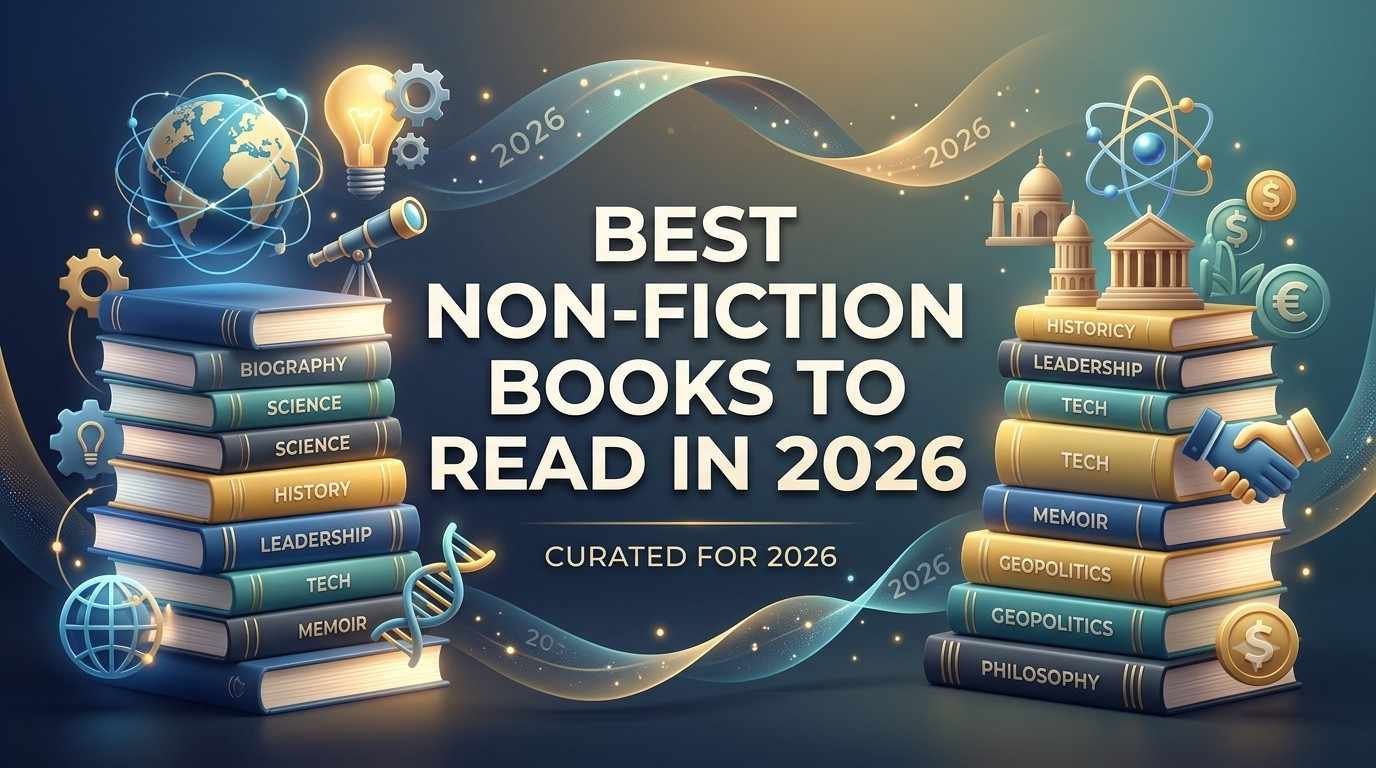
The best non-fiction books to read in 2026 kind of offer something for almost every curious type, whether you want to poke at history with Stay Alive, understand science through Everything Is Tuberculosis, circle consciousness via A World Appears, chase a real life mystery in London Falling, or sharpen day to day choices with those durable staples like Atomic Habits and The Psychology of Money. Current Goodreads lists, plus reader driven rankings, seem to show real pull across a broad span of 2026 non-fiction, and the audiobook numbers suggest people still lean toward practical, personal development type stories. Honestly the smartest reading list isn’t always the one with the most titles, it’s the one that kind of keeps you exposed to different ideas , different lives experiences, cultures, and ways of thinking that you wouldn’t normally touch. Instead of trying to collect everything at once, pick one subject you actually care about, begin with a single compelling book, and let the rest of your reading line up grow, kind of by itself, from there.
Frequently Asked Questions
1. What are the best non-fiction books to read in 2026?
Popular choices include London Falling, Everything Is Tuberculosis, A World Appears, Stay Alive, and Monster of a Land, based on current 2026 reader lists.
2. What is the best non-fiction book for personal growth?
Atomic Habits remains a strong choice for building better routines and continues to rank highly among bestselling non-fiction audiobooks in 2026.
3. Which non-fiction books are good for beginners?
Memoirs, narrative history, popular science, and practical personal-development books are usually approachable starting points because they combine useful information with storytelling.
4. What are the best science non-fiction books in 2026?
Everything Is Tuberculosis and A World Appears are two notable choices, covering infectious disease, science, consciousness, and human experience.
5. Are older non-fiction books still worth reading in 2026?
Absolutely. Books such as Atomic Habits and The Psychology of Money continue to attract large audiences, showing that useful ideas can remain relevant years after publication.