Do you ever get to the end of a hectic day and still think, where did all my time go? You might have answered emails, sat through meetings, checked messages, wrapped up little chores, and stayed in motion for hours, but the stuff that actually matters is still just… waiting. That’s a big issue with modern productivity, like, being “busy” and being effective can end up meaning totally different things. If you don’t have a real plan for time management, the loud urgent tasks tend to grab your focus while the important goals keep sliding farther away.
The reference article does something pretty useful because it takes a more personal angle, it talks about three areas: Self-care, Priorities, and Anchors, and it basically says that people should craft systems that fit their own lives, inclinations, and rhythm of work, instead of trying to squeeze themselves into a strict productivity routine. And from that, this guide expands into a broader, practical framework for handling your time well. The goal isn’t to cram every single minute with activity. It’s more about building a system that helps you figure out what deserves your attention, safeguard your energy, and keep making steady progress without turning everything into unnecessary stress.
What Does Effective Time Management Really Mean?
Time management is sometimes misread as trying to cram more activities into a single day, like you can just squeeze everything in, no big deal. But in practice, good management seems more about choosing where your limited focus, and energy should land. Sure, everyone gets the same number of hours though, yet obligations, energy levels, how you work, and your personal circumstances all show up differently. So a plan that feels genius for one person can turn into something oddly annoying for another. That’s why a solid productivity system really needs to be adaptable enough to mirror your actual life, instead of making you march your life into some fixed, rigid timetable.
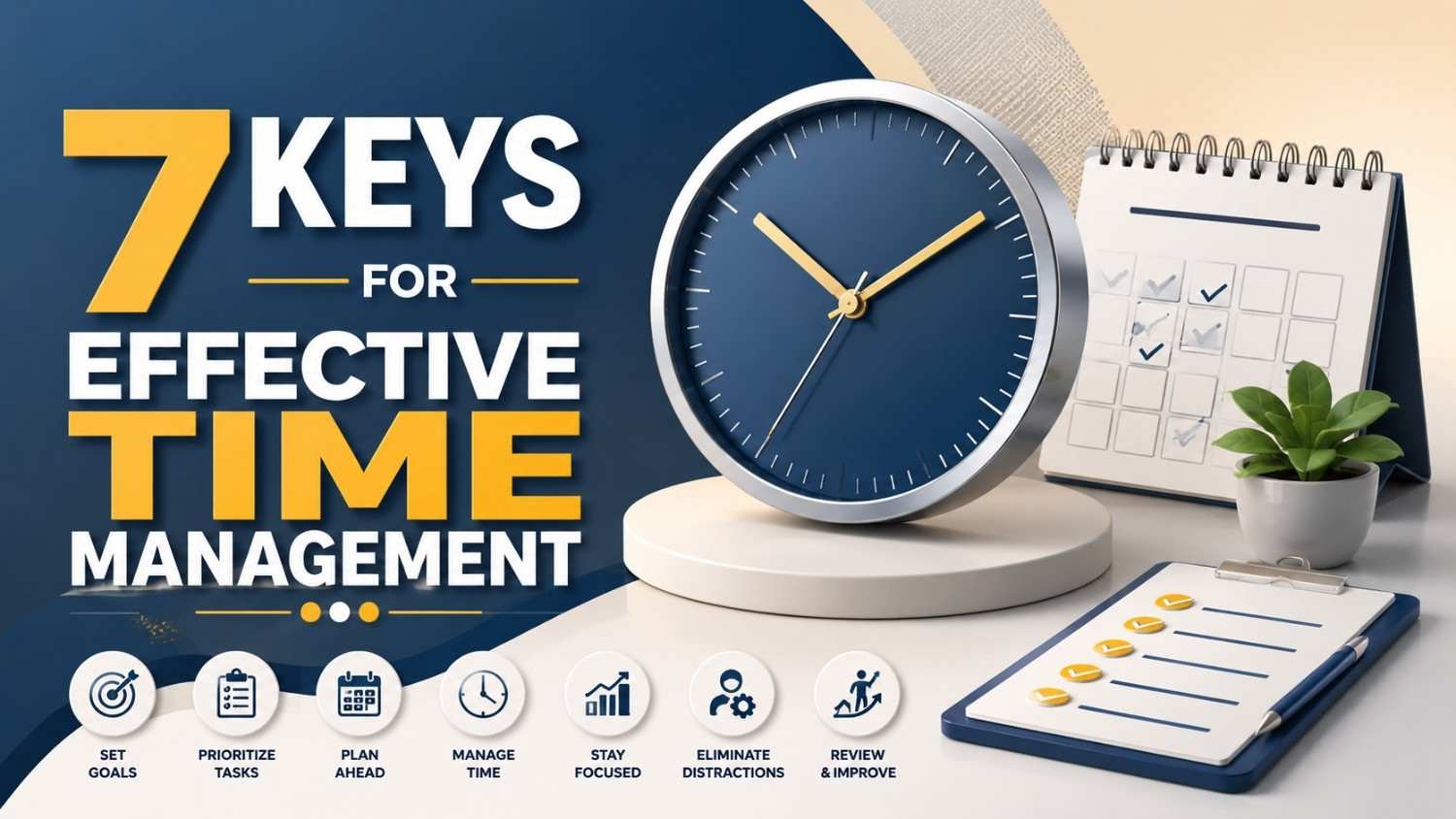
1. Start With Your Priorities, Not Your To-Do List
A long to-do list can look like organization I guess, but it can quietly add more stress than you notice. When everything seems equally important, it gets kinda hard to figure out what truly deserves your attention first. Rather than starting your morning with “What do I need to do?” try “What would make today successful?” It’s a small shift, like from pure activity to the actual outcome. After your key outcomes are clear , the smaller tasks sort of fall into place and become easier to arrange around those goals.
Try this simple approach:
- Choose one major priority for the day.
- Identify two or three supporting tasks.
- Separate important work from routine administration.
- Move non-essential tasks to another day.
- Review your priorities before accepting new commitments.
This approach helps prevent your schedule from being controlled entirely by other people’s requests.
2. Build a Personal Productivity System
No single productivity method is out there that just works perfectly for everyone. Some folks seem to like those detailed schedules , others do better with a looser set of task lists. A few people need long stretches of uninterrupted work, but then some other people work best when the day breaks into shorter, more pointed sessions. The reference article basically says the same thing in a more personalized way, like the system should match you, not the other way around. So your task is kind of to experiment. Test a couple of approaches for a few weeks and pay attention to what actually helps you finish the important stuff with less friction.
3. Protect Your Energy Along With Your Time
One of the most ignored pieces in solid time management is energy management. Two hours of focused work, when you’re mentally fresh , can be more useful than four hours of distracted effort when you’re run down. So yes, your planning should take into account when you naturally have higher concentration. If you’re most alert in the morning, guard that time for the harder work. Then use the lower-energy moments for emails, routine administration, tidying up files, or other fairly easy chores.
Match tasks with energy:
- High-energy periods → strategic or creative work.
- Moderate-energy periods → meetings and collaboration.
- Low-energy periods → administration and routine tasks.
- Recovery periods → breaks, meals, walking, or quiet time.
This creates a more realistic relationship between productivity and human capacity.
4. Use Time Blocking Without Making Your Day Rigid
Time blocking is basically you give certain chunks of time to specific activities, rather than just going from an open-ended task list. Like say you set aside the first bit of your morning for focused work, you put meetings later on, and you keep an afternoon slot reserved for the boring admin stuff. The idea is not to get every single minute nailed down with total precision. Stuff will pop up. Unexpected calls, urgent requests, random technical troubles, even personal responsibilities, they will show up. So the plan should include some air, a little breathing room, not be jam-packed from morning until night.
A flexible day might include:
- A focused work block.
- A short break.
- A second priority block.
- Meetings or collaboration.
- Administrative work.
- Buffer time.
- A brief end-of-day review.
The buffer is important because a schedule without flexibility can quickly collapse when something unexpected happens.
5. Create Daily Anchors
A useful productivity system, honestly, can help a lot from consistent “anchors” things that tend to happen around the same spot in the day. These anchors lower how many choices you’re forced to make. Like, you can review your priorities right after you start working, check messages at set moments, take a lunch pause that repeats regularly, and then do a quick look over unfinished tasks before you wrap up. This reference framework points out “Anchors” as a category along with Self-care and Priorities, inside its S.P.A. approach. And no, your anchors do not really need to be elaborate. In practice, the strongest ones are usually pretty straightforward, and repeatable enough without a whole ceremony.
6. Control Digital Distractions
Modern work makes distraction weirdly easy. Email alerts, chat programs, social media, news pings, and that constant swapping between browser tabs can pop in between you dozens of times. Even if each interruption is only a handful of seconds, that repeated attention switching can make deep, demanding tasks much harder to finish.
Reduce unnecessary interruptions by:
- Turning off non-essential notifications.
- Keeping your phone away during focused work.
- Checking email at planned times.
- Closing unrelated browser tabs.
- Using website or app limits when necessary.
- Creating a distraction-free workspace.
You do not need to eliminate technology. You simply need to prevent technology from deciding where your attention goes.
7. Learn to Prioritize Using Impact
Not every task really deserves the same slice of time. A useful way to take a closer look at your workload is kind of to weigh the possible impact of each activity in real life. Like, a job that only takes 20 minutes but directly helps an important goal might merit more attention than a two-hour activity that ends up giving small, rather meaningless progress, ok maybe. Even if it feels heavy at first, the actual effect matters more than the clock.
Before starting a task, ask:
“What happens if I do this today, and what happens if I don’t?”
This question can reveal which activities are genuinely important and which have simply become habits.
The Difference Between Urgent and Important Work
Urgent work demands immediate attention, but that does not automatically make it important, i mean it can feel like it should be right now… An email might feel urgent, because someone expects a response, and suddenly everything is like “go go.” Meanwhile, a long term business strategy may not feel urgent, since there is no real deadline showing up on the calendar. Still, sidelining the strategic work for weeks can end up creating much larger problems later. So a balanced schedule needs real room for the important stuff, before everything turns urgent, and yes it happens faster than you think
Divide tasks into:
- Important and urgent: Handle promptly.
- Important but not urgent: Schedule deliberately.
- Urgent but low impact: Delegate or batch where possible.
- Neither important nor urgent: Remove or minimize.
This simple distinction can significantly improve how to prioritize daily tasks.
Batch Similar Tasks Together
When you keep shifting between things that don’t really belong together, the whole day can feel weirdly fragmented. Task batching is basically you putting similar activities in the same stretch of time. Like instead of checking email every few minutes all day long, you handle messages during two or three planned windows, and that’s it. This same idea can also work with phone calls, content production, administrative work, appointments, or the usual paperwork stuff. In the end, batching cuts down on needless context switching and leaves bigger blocks for deep focus.
learn the value of saying No, without making it dramatic
Time management isn’t just about lining up the tasks you choose to do. It’s also about choosing what you should not accept. Every meeting, initiative, request, and obligation quietly takes time energy, and attention… even if it doesn’t look that way at first. If you keep saying yes to everything, the priorities that actually matter most tend to get pushed aside. Before taking on another commitment, check if it supports what you’re already responsible for, or if someone else could reasonably cover it. A calm “not right now” can protect more value than an eager yes that later turns into deadlines that slip.
Take breaks without feeling like you’re failing
Some places treat breaks like they’re wasted minutes, especially where constant movement gets mistaken for productivity. But working nonstop, without recovery, can make concentration get worse over time. Short pauses give you a chance to step away, walk a bit, grab water, or just reset your focus. The reference approach also puts self-care right inside its time-management model, not shoved off as an extra that you only do “after.”
Useful recovery activities include:
- Walking for a few minutes.
- Stretching.
- Having a meal away from the screen.
- Practicing quiet breathing.
- Looking away from digital devices.
- Taking a short outdoor break.
The objective is to return to work with better attention, not simply to accumulate more working hours.
Create a Realistic Weekly Plan
Daily planning can be useful , but weekly planning gives you a broader view, and honestly it helps more than you think. Around the start or the end of each week, take a moment and spell out the main results you’d like to get to. After that, take each result and break it down into smaller actions that can actually fit onto individual days. That way you don’t end up stuffing every day with separate chores and then somehow forgetting the bigger mission you meant to reach. Also, a weekly plan can show you the overstuffed stretches. Like if Tuesday is already jammed with meetings and deadlines, you might need to shift extra work somewhere else , rather than assuming you’ll “find” time later.
Use the Two-Minute Rule, but don’t overdo it
Some minor tasks can be completed right away , rather than added to a list that keeps growing. If something truly takes only a couple minutes, and it doesn’t derail the important work you’re doing, finishing it immediately can stop the usual administrative clutter. Still, the rule should not turn into a habit of walking away from deep focus again and again. If you’re halfway through an important task, jot down the small request and handle it later. The real idea is pretty simple: tiny tasks shouldn’t end up steering your whole day.
Review Your Day Before You Stop
A short five-minute check can lift tomorrow’s productivity. Instead of ending the day by just closing your laptop, look at what got finished, what’s left undone, and what should take priority next.
Ask yourself:
- What did I accomplish?
- What consumed more time than expected?
- What distracted me?
- What should I continue tomorrow?
- What can I remove from my list?
This creates a feedback loop. Over time, your personal time management system becomes based on your actual behaviour rather than assumptions about how you think you work.
Stop Trying to Be Productive Every Minute
One of the biggest productivity mistakes i think is believing that every minute has to spit out measurable output. Like, life is also made of conversations, rest, meals, thinking, learning, relationships, exercise, and those little unplanned moments that show up anyway. So if a schedule leaves absolutely no room for any of that, it may not be “efficient” as much as it is just unsustainable , you know. Real productivity should build enough structure so important work can happen but still leave space for recovery and real life stuff. So in the end, the whole point of time management is more about control not about being busy all the time .
Common Time Management Mistakes to Avoid
Even a well-designed system can fail if it becomes too complicated.
Common mistakes include:
- Creating unrealistic daily schedules.
- Treating every task as equally important.
- Checking messages continuously.
- Skipping breaks.
- Planning without reviewing results.
- Accepting too many commitments.
- Copying someone else’s productivity routine without adapting it.
- Measuring productivity only by hours worked.
A simple system that you actually follow is more valuable than an impressive system that becomes another source of stress.
A Simple Time Management Routine to Start Today
If you want to boost your productivity like right now, don’t try to redesign your entire life. Start tomorrow by picking one big priority , two supporting chores or tasks , and set up a realistic block of uninterrupted work. During that block, turn off the noise notifications and after it, schedule a quick recovery break , not too long, just enough. Then at the end of the day, take five minutes and look back at what worked. Do this for one whole week and tweak small things based on how it felt for you. That way you get a sustainable routine, without needing complicated productivity software , or a schedule that is basically unrealistic.
Conclusion
Good time management is not really about cramming extra work into every open minute. It’s more about choosing on purpose where your time, focus, and energy should land. The personal approach described in the reference article , built around Self-care, Priorities, and Anchors , gives a solid starting point because it understands that productivity systems do best when they match the person using them. When you mix clear priorities, flexible time blocking , daily anchors, energy management, distraction control, realistic planning, regular pauses, and consistent check-ins, you end up with a system that supports both real, meaningful work and a healthier work-life balance. The best system probably isn’t the most complicated one. It’s the one you can actually use, tune, and keep going over time.
Frequently Asked Questions
1. What is the most effective time management strategy?
Start by identifying your most important priorities, then schedule focused time for them before less important tasks consume your day. The strategy should also include flexibility for unexpected responsibilities.
2. How can I manage my time better at work?
Prioritize high-impact work, reduce unnecessary notifications, batch routine tasks, use focused work blocks, and review your progress at the end of each day.
3. Is time blocking good for beginners?
Yes. Beginners can start with only two or three blocks rather than scheduling every minute. Keeping the system flexible makes it easier to maintain.
4. How do I stop wasting time at work?
Identify your biggest distractions first. Limiting unnecessary notifications, reducing multitasking, batching communication, and protecting focused work periods can make a significant difference.
5. Can time management reduce stress?
A realistic system can reduce stress by clarifying priorities, preventing important work from being constantly postponed, and creating space for breaks and recovery. However, productivity strategies cannot eliminate every source of workplace or personal stress.