Many people want to read more non-fiction books, but somehow they still struggle to finish them. A lot of times, the problem is that some books feel a bit repetitive, or they use complex language, or they are just straight up hundreds of pages long, so reading becomes a chore more than a real learning moment. So you get this loop where countless readers start with enthusiasm and then they stop, after like a couple chapters , because it’s harder than expected. And yeah, that can be discouraging, especially for busy professionals , students, and anyone trying to keep a steady reading routine while also juggling work, family , and all those personal commitments.
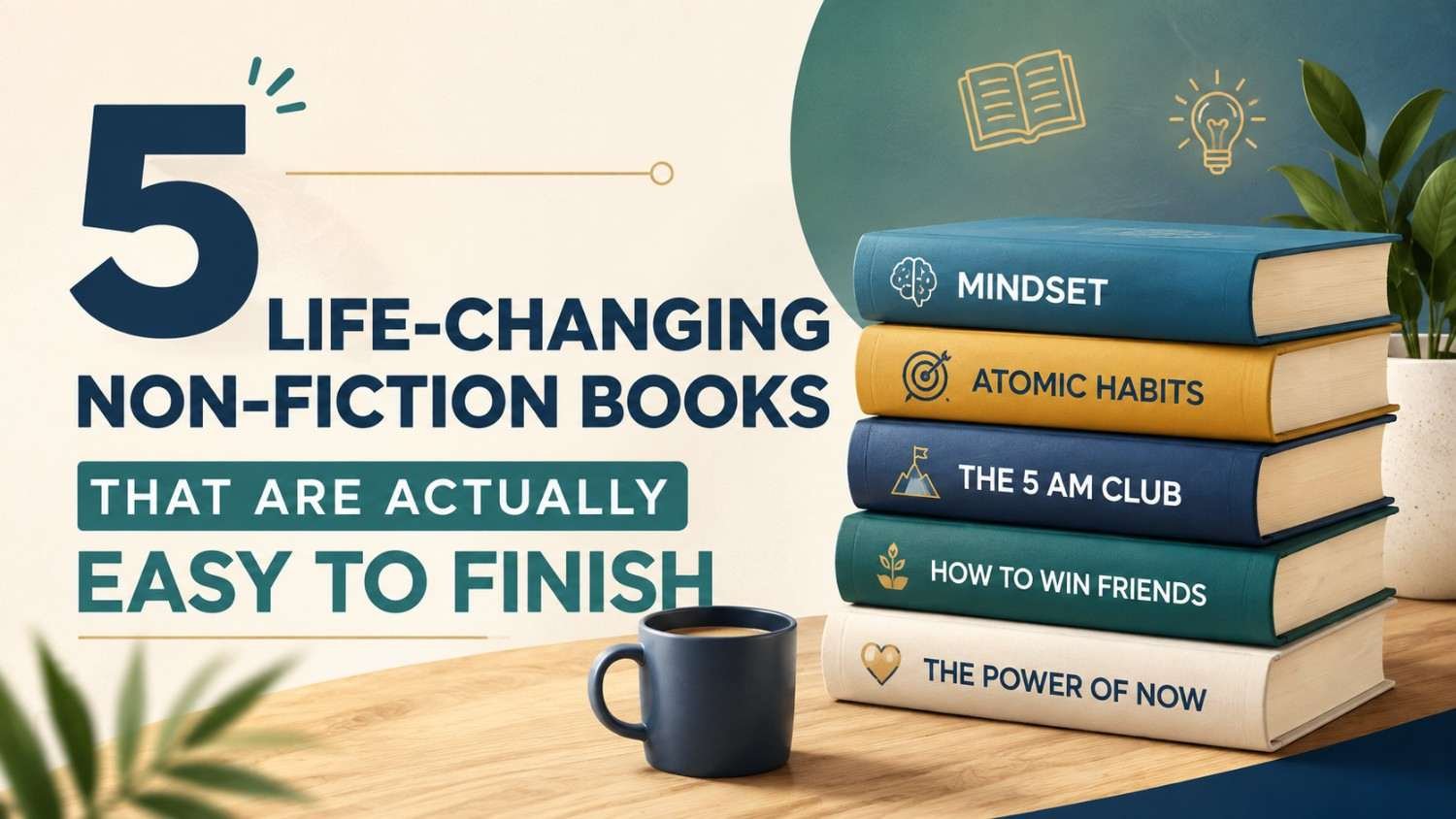
The good news though is that not every great non-fiction book needs weeks of intense dedication. Some of the most influential titles are surprisingly light on the eyes because they share strong ideas in a simple, engaging, and actionable way. So no matter if you’re aiming to boost productivity, build better habits, sharpen communication skills , or reshape your mindset, picking books that are easy to access makes it more likely you’ll stay motivated and actually use what you learn. In this guide, we’ll walk through five life-changing non-fiction books that are friendly for beginners, highly practical, and totally worth reading all the way through, from the first page to the last.
Why Easy-to-Finish Books Often Create Bigger Change
A lot of readers think that longer books mean more value, but honestly it dose not always work like that. The best non fiction books tend to spend their time on practical ideas, explained clearly and in a straight forward way rather than dumping hundreds of pages of extra material. When a book feels concise and engaging it is, usually, easier to finish , you’re more likely to remember it too, and then use those ideas in everyday life, not just admire them from a shelf. Also finishing a book creates this kind of momentum, like a gentle push. When you complete one good read it motivates you to begin the next one, and over time that builds a sustainable habit. Instead of judging success by how many pages you crossed off, try focusing on what you actually implement after reading. Those small insights, when you apply them again and again, often lead to bigger long term outcomes than unfinished books that just wait in silence, collecting dust.
What Makes a Great Beginner-Friendly Non-Fiction Book?
Not every bestselling book is suitable for new readers. The books featured in this list were selected because they combine practical advice, engaging storytelling, and straightforward writing styles.
A beginner-friendly non-fiction book usually includes:
- Clear and simple language.
- Actionable lessons.
- Real-world examples.
- Short chapters.
- Practical frameworks.
- Easy readability.
These characteristics make learning enjoyable while helping readers stay motivated until the final chapter.
1. Atomic Habits by James Clear
Atomic Habits
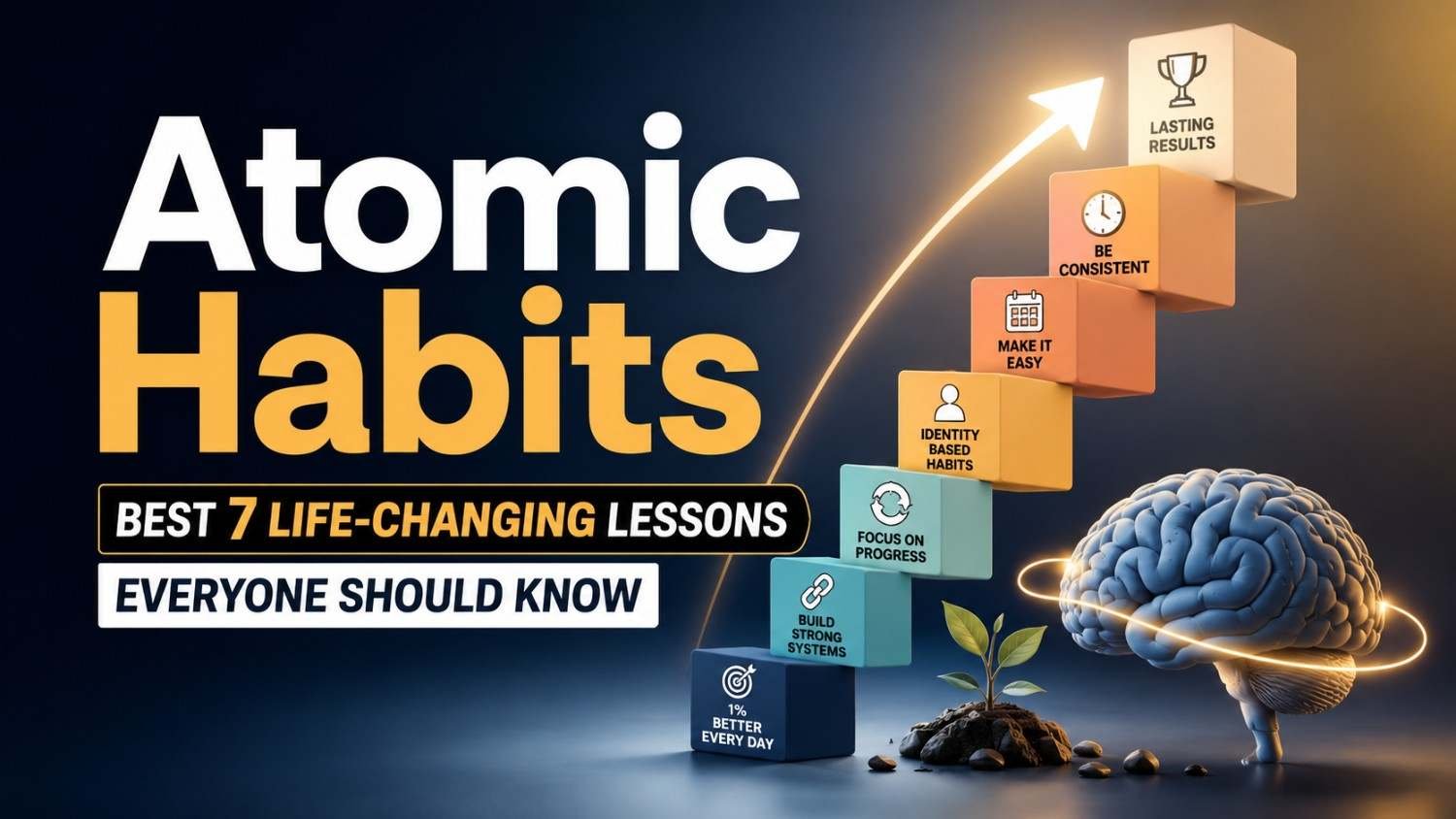
There is this non fiction book that, kinda shows up on recommended reading lists all the time and it is Atomic Habits. James Clear explains how tiny daily upgrades can add up to really remarkable long-term outcomes, mainly because small consistent habits have this kind of power to compound. Instead of just leaning on motivation alone , the book shows that when you reshape your surroundings and the systems around you, good habits become easier to keep and bad habits become harder to redo. One reason it is so easy to finish is that the whole thing feels logical and fairly well arranged, plus the examples are practical . Each chapter basically brings in one clear idea, then follows it with actionable advice that readers can use right away. And no matter if your aim is boosting productivity, getting exercise regularly, reading more, or ending unhealthy routines, the lessons stay useful across a lot of different parts of life.
Key Lessons
- Small habits create big results.
- Systems matter more than goals.
- Environment shapes behavior.
- Consistency beats perfection.
2. The Psychology of Money by Morgan Housel
The Psychology of Money
A lot of finance books really lean hard into investment strategies, formulas, or technical ideas. But The Psychology of Money kinda takes a sideways route, looking at how feelings, habits, and personal moments shape what people actually do with their finances. Instead of showing readers how to forecast the market, Morgan Housel leans into why people make seemingly irrational decisions with money, and how calmer, better thinking often leads to better results over time. What I like is that the book is built with short chapters, so you can jump around and still get it, it is kind of friendly for readers who are always moving. Each little story brings a practical takeaway about saving, investing, steadiness, risk, and the habit of thinking long term. It doesn’t try to drown you in complicated financial words, which honestly makes it easier to stick with.
Key Lessons
- Wealth is different from income.
- Patience creates long-term success.
- Good financial decisions are behavioral.
- Simplicity often wins.
3. Make Your Bed by Admiral William H. McRaven
Make Your Bed
Yeah so, based on a well known commencement speech, Make Your Bed sort of shows how these little everyday habits— they add up to discipline, resilience, and eventually, personal success. And it draws from his military life , Admiral McRaven kind of passes along lessons that focus on responsibility , real nerve, working together as a unit, and going on, even when things get rough and hard. Also the book is fairly short, which makes it good for people who want useful insights without, you know, investing in a long read. Each chapter gives you one clear and memorable takeaway, backed by real life stories that make the whole message feel natural, kind of sticky to remember.
Key Lessons
- Start each day with purpose.
- Small victories build confidence.
- Discipline supports success.
- Never give up during challenges.
4. Essentialism: The Disciplined Pursuit of Less by Greg McKeown
Essentialism: The Disciplined Pursuit of Less
Modern life kind of pushes people to do more, work longer hours , and stay busy all the time. Essentialism sorta argues back that real success comes not from cramming everything in, but from concentrating on fewer, yet more meaningful priorities. Greg McKeown basically walks through how removing the needless commitments lets you pour your energy into what actually matters.
The writing feels clear and practical, and it comes with relatable examples from business life and everyday routines . Readers get to see how to make careful choices, set healthy boundaries , and cut down distractions, without ending up overwhelmed or burned out.
Key Lessons
- Focus on high-impact activities.
- Learn to say no.
- Eliminate unnecessary work.
- Protect your time intentionally.
5. The Four Agreements by Don Miguel Ruiz
The Four Agreements
Although it might look pretty simple in structure , The Four Agreements has somehow influenced millions of readers, by offering four guiding principles to live with more clarity and emotional freedom. In the background there is this sort of ancient wisdom angle, and Don Miguel Ruiz pretty calmly shows how daily assumptions, self judgment , and the way we talk can turn into unnecessary stress and conflict. The chapters are short ,and the writing feels like a direct conversation, so most people can finish it in just a few sittings. Even with all that simplicity, readers still come back to the lessons more than once ,because the message keeps feeling useful in real life.
The Four Agreements
- Be impeccable with your word.
- Don’t take anything personally.
- Don’t make assumptions.
- Always do your best.
What These Books Have in Common
Even though these books look like they’re about different topics, they sort of overlap in ways that help explain why people keep coming back , and why their effect lasts. Most of them point toward practical progress more than abstract theory, so you’re nudged to try the ideas right away. Not just read, then file it away. Another thing they share is how approachable everything is. None of these titles truly demand specialized knowledge, which makes them good for newcomers and also for people who already have some experience. The writing stays clear, the narratives are easy to remember , and the guidance is “do this next” kind of stuff. In the end, complicated concepts get turned into everyday habits, not just stuff to admire from a distance.
Shared Characteristics
- Easy language.
- Practical advice.
- Real-world examples.
- Short chapters.
- Action-oriented lessons.
- Timeless principles.
How to Remember More From Every Book
Reading a great book is just the start, really. The value is more in how you remember it and then apply those ideas, over time, like consistently, not only in your head. After you finish a chapter, pause a little, even 10 breaths or something, and think about the main lesson, the one that actually sticks. Mark out passages that feel meaningful, jot notes using your own wording, and ask yourself what single action you can do right away. If you talk about what you read with friends , or you write a short recap, that usually makes the understanding deeper and the memory lasts longer. Instead of speeding through a bunch of books, you might do better by applying one strong lesson until it becomes real, then you move on to the next read.
Building a Durable Reading Habit
A lot of folks don’t create a reading habit because they set targets that are too ambitious. Reading around 15 to 20 minutes every day is often enough to work through several books in a year, without feeling overloaded.
Helpful strategies include:
- Read at the same time daily.
- Keep a book nearby.
- Reduce phone distractions.
- Set realistic reading goals.
- Track completed books.
- Apply one lesson immediately.
Consistency matters far more than reading speed.
Should You Read Physical Books, Ebooks, or Audiobooks?
There isn’t really a universally correct format. The best choice… honestly depends on your lifestyle, and on how you prefer to learn, like what your brain does best. Physical books tend to help with concentrated reading and real note-taking. Ebooks give that convenience and portability, while audiobooks let you keep learning during commuting, while you’re exercising, or doing household tasks. A lot of successful readers kind of mix all three formats, depending on what’s going on that day.
The most important part is not picking the “perfect” one, but choosing a format that helps you read consistently, instead of only once in a while.
Common Mistakes New Readers Make
Lots of beginners, even with good intentions, accidentally make reading harder than it needs to be. A typical mistake is grabbing an overly complex book just because it shows up on bestseller lists. Then other people feel obligated to push through books they aren’t enjoying anymore, and that quietly lowers their motivation for reading later. It’s completely fine to stop a book when it isn’t really helping you, and swap it for something that matches your current interests better. Reading should spark learning, and keep that curiosity alive, not turn into just another obligation you have to carry.
Who Should Read These Books?
These recommendations are valuable for a wide range of readers, including:
- Students developing lifelong learning habits.
- Professionals seeking productivity improvements.
- Entrepreneurs building stronger decision-making skills.
- Anyone interested in personal growth.
- Readers returning to books after a long break.
Their practical nature makes them suitable regardless of age or profession.
Key Takeaways
- Shorter books are often easier to finish and apply.
- Practical lessons create lasting behavioral change.
- Reading consistently matters more than reading quickly.
- Focus on implementation rather than information overload.
- Choose books that match your current goals.
- Build momentum by completing accessible books first.
- Reflection and note-taking improve retention.
- Lifelong learning begins with consistent reading habits.
Conclusion
Reading non-fiction shouldn’t feel so overwhelming, or at least not in a way that makes you back away. Honestly the best books aren’t always the longest or the most complex… they’re the ones that share meaningful ideas in a way that kind of pushes you toward real change, even after the last page. These five non fiction books show ( kind of ) how lessons tied to habits, productivity, money, attention, and personal growth can be shared using stories that pull you in, plus practical guidance that most people can understand right away and use. If you are just starting your personal development journey, or you’re trying to rebuild a reading rhythm, picking material that is easy to enter is one of the smartest moves you can make. Wrap up one book, try one lesson, then repeat… and little by little you build a library of understanding that sharpens your thinking, your choices, and the way you handle everyday life, too.
Frequently Asked Questions
1. Which non-fiction book is best for beginners?
Atomic Habits is one of the best beginner-friendly non-fiction books because it uses simple language, practical examples, and actionable strategies for building better habits.
2. How many non-fiction books should I read each year?
There is no ideal number. Reading and applying even six to twelve high-quality books annually can provide meaningful personal and professional growth.
3. Are audiobooks as effective as physical books?
Yes. Audiobooks can be just as valuable, especially when listened to attentively. The best format is the one that helps you learn consistently.
4. How can I remember what I read?
Take notes, highlight important ideas, summarize chapters, discuss concepts with others, and apply one lesson immediately after finishing each book.
5. Why are shorter non-fiction books often easier to finish?
Shorter books typically focus on the most important ideas without unnecessary repetition, making them easier to complete, remember, and implement in daily life.