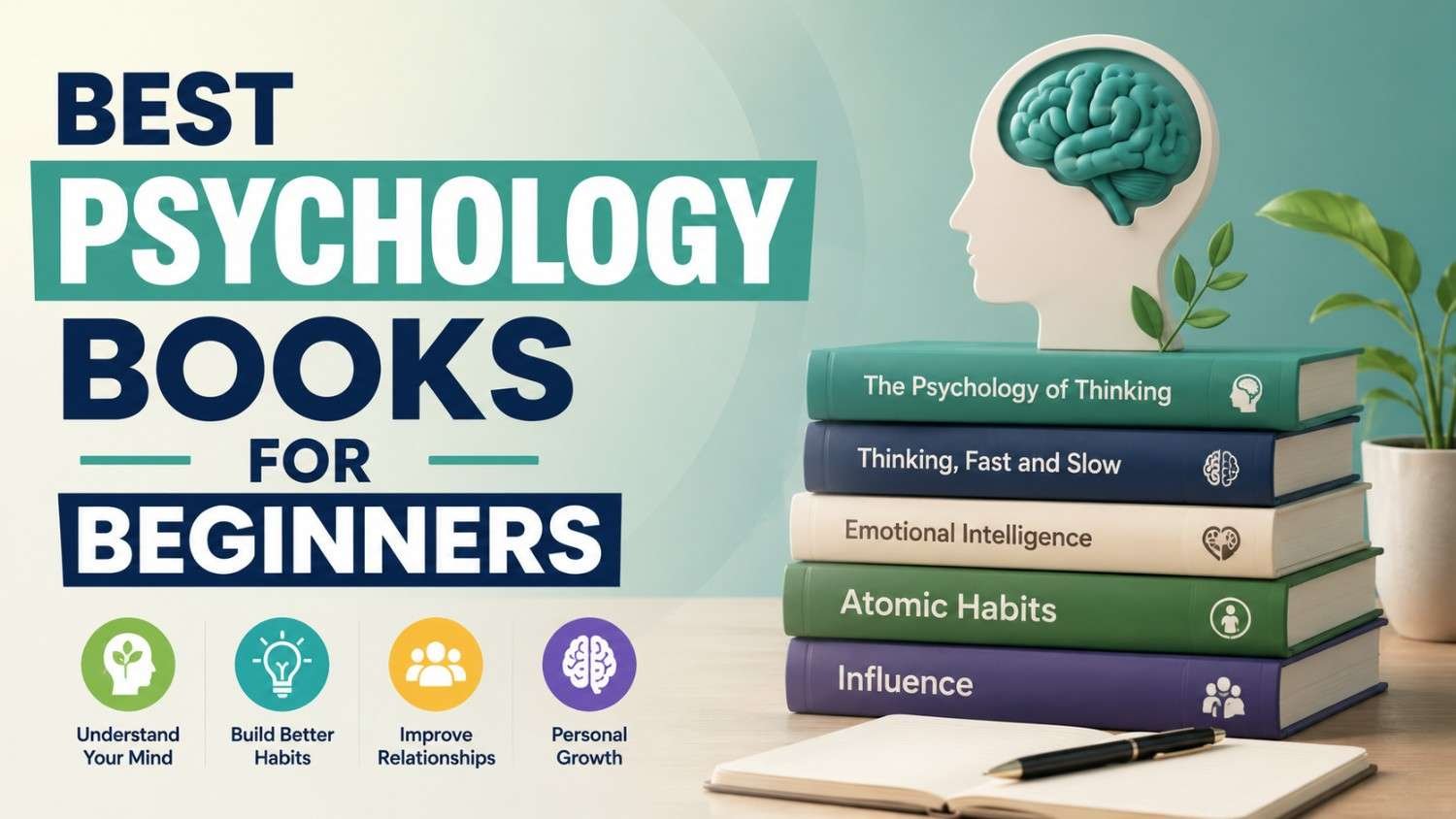
Psychology is one of the most interesting subjects, because it kind of helps us get a grip on how people think, feel, act, and then end up making decisions. Really, every day our thoughts, emotions, routines, and even small social interactions can nudge the choices we make at work, in relationships, and all through our own personal life stuff. But still, a lot of people assume psychology is this heavy academic thing, stuffed with complicated ideas and scientific vocab that feels hard to access. It’s true that psychology does involve careful research and clinical studies, but there are also plenty of beginner books that describe key concepts in a clear, engaging, and practical way. Those books make it less complicated to understand yourself, sharpen communication, form more solid connections, and build better daily behaviors without you needing some special background in psychology.
Whether you’re a student, a working professional, an entrepreneur, or just someone who wants better personal development, psychology books can give real, useful insights into motivation, emotional intelligence, decision-making, memory, productivity, and the overall ways humans behave. A bunch of the most popular psychology books mix research with real-life examples, so the ideas stay easy to follow and also simple to use in everyday moments. In this guide, we’ll look at the Best Psychology Books for Beginners, point out what makes each one valuable, and share why these picks keep shaping how millions of readers understand themselves and other people.
Why Read Psychology Books?
Psychology books kind of help readers get a clearer sense of who they are, and also what’s going on with the folks around them. They describe, in a pretty direct way why we end up with certain routines, how feelings lean into our choices, why some bonds work out and others just don’t, and how those daily mental grooves end up shaping behavior.
For beginners, these books can also boost self awareness, and they give practical methods for personal progress, and even for professional improvement too.
Benefits of Reading Psychology Books
- Understand human behavior.
- Improve communication skills.
- Build emotional intelligence.
- Make better decisions.
- Strengthen relationships.
- Support personal growth.
Learning psychology helps improve many areas of everyday life.
1. Thinking, Fast and Slow by Daniel Kahneman
Thinking, Fast and Slow by Daniel Kahneman is a book that explains how our brain works when we make decisions. Daniel Kahneman is a Nobel Prize winner. He wrote this book to help us understand why we sometimes make choices that do not make sense. The book talks about how our brain has two systems for thinking and how this affects the decisions we make. It also talks about how our biases can influence what we think and how slowing down can help us make choices. The book is great for people who are just starting to learn about psychology because it has a lot of advice.
Why You Should Read Thinking, Fast and Slow
- It explains how we make decisions in a way that’s easy to understand.
- It talks about biases. How they affect our thinking.
- It uses real life examples to help us understand the concepts.
- It can help us think critically.
2. The Power of Habit by Charles Duhigg
The Power of Habit by Charles Duhigg is a book that talks about how habits work. Habits are things we do every day without thinking about them. Charles Duhigg explains how habits are formed and how we can change them if we want to. He uses a lot of life stories and scientific research to help us understand habits. The book is great because it helps us understand how habits work and how we can make changes in our lives.
Key Takeaways from The Power of Habit
- We can understand how habits are formed.
- We can learn how to develop routines.
- We can replace habits with good ones.
- We can be more productive every day.
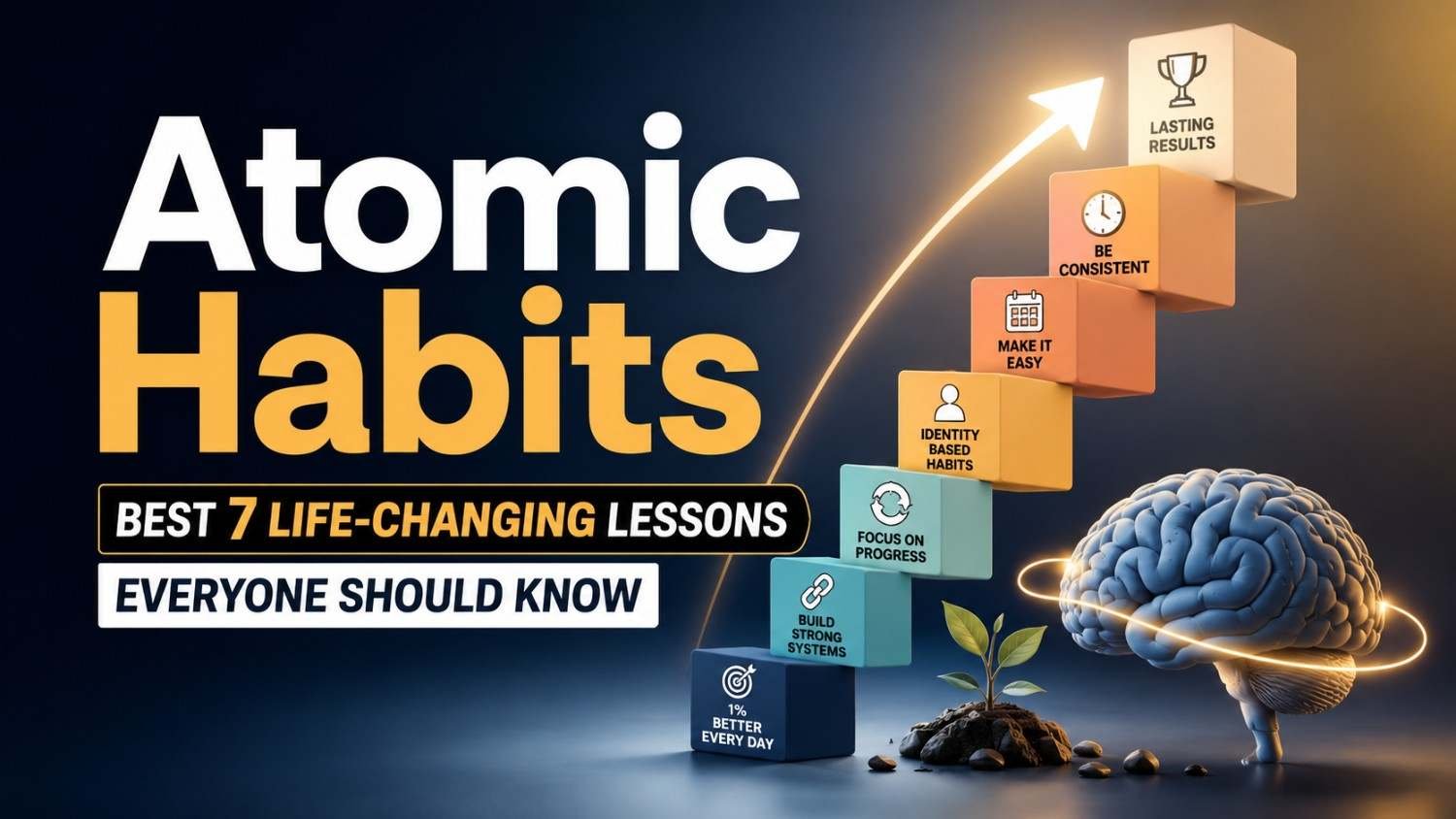
3. Atomic Habits by James Clear
Atomic Habits by James Clear is a book that helps us understand how small changes can add up to make a difference in our lives. James Clear talks about how we can build habits and get rid of bad ones. He gives us advice on how to do this. The book is great because it is easy to understand and it has a lot of examples that we can relate to.
Why Atomic Habits is Popular
- The writing style is simple and easy to understand.
- The strategies are practical and easy to follow.
- The examples are easy to understand and relate to.
- The book can help us make term changes in our lives.
4. Emotional Intelligence by Daniel Goleman
Emotional Intelligence by Daniel Goleman is a book that talks about how important it’s to understand and manage our emotions. Daniel Goleman explains how emotional intelligence can help us have relationships and achieve our goals. The book is great because it helps us understand the importance of intelligence and how we can develop it.
Highlights of Emotional Intelligence
- We can become more aware of our emotions.
- We can have better relationships.
- We can manage our emotions in a way.
- We can develop empathy. Understand others better.
5. Influence: The Psychology of Persuasion by Robert Cialdini
Influence: The Psychology of Persuasion by Robert Cialdini is a book that talks about how people’re influenced and persuaded. Robert Cialdini explains six principles that can help us understand why people say yes to things. The book is great because it helps us understand how influence works and how we can use this knowledge to communicate effectively.
Why Read Influence
- We can learn about persuasion techniques.
- We can improve our communication skills.
- We can understand how people make decisions.
- We can recognize when someone is trying to manipulate us.
6. Mans Search for Meaning by Viktor E. Frankl
Mans Search for Meaning by Viktor E. Frankl is a book that talks about the authors experience in a concentration camp during World War II. Viktor Frankl shares his story and the lessons he learned about hope, resilience and the importance of finding meaning in life. The book is great because it is inspiring. It helps us understand the human ability to find meaning even in difficult circumstances.
Best Features of Mans Search for Meaning
- The story is. True.
- The lessons are powerful. Can help us in our lives.
- The book talks about resilience.
- The story has an emotional impact.
7. The Gifts of Imperfection by Brené Brown
The Gifts of Imperfection by Brené Brown is a book that talks about the importance of accepting ourselves and our imperfections. Brené Brown explains how we can develop self-acceptance and self-confidence. The book is great because it helps us understand the importance of self-acceptance and how we can develop it.
Why Readers Love The Gifts of Imperfection
- The book encourages self-confidence.
- It promotes well-being.
- It has advice that we can use.
- It is based on research and real life examples.
8. Predictably Irrational by Dan Ariely
Predictably Irrational by Dan Ariely is a book that talks about how people make decisions. Dan Ariely explains why we make these decisions and how we can make choices. The book is great because it helps us understand why we make decisions and how we can change our behavior.
Highlights of Predictably Irrational
- The experiments are fun and interesting.
- The psychology is easy to understand.
- The book talks about economics.
- It can help us make decisions.
9. Drive by Daniel Pink
Drive by Daniel Pink is a book that talks about motivation and how we can motivate ourselves and others. Daniel Pink explains why traditional rewards do not always work and what we can do instead. The book is great because it helps us understand what motivates us and how we can use this knowledge to improve our lives.
Why Drive is Worth Reading
- We can understand what motivates us.
- We can improve our performance at work.
- We can be more productive.
- We can inspire growth.
10. The Happiness Hypothesis by Jonathan Haidt
The Happiness Hypothesis by Jonathan Haidt is a book that talks about happiness and how we can achieve it. Jonathan Haidt explains how ancient philosophy and modern psychology can help us understand happiness. The book is great because it helps us understand what happiness is and how we can achieve it.
Key Benefits of The Happiness Hypothesis
- We can understand what happiness is.
- We can improve our well-being.
- We can learn psychology.
- We can gain a perspective on life.
11. Quiet by Susan Cain
Quiet by Susan Cain is a book that talks about the strengths of introverts. Susan Cain explains how introverts can be successful in a world that often favors extroverts. The book is great because it helps us understand the importance of introverts and how they can contribute to society.
Why Read Quiet
- We can understand ourselves better.
- We can improve our communication skills.
- We can learn about personality types.
- The research is strong and reliable.
12. Mindset by Carol S. Dweck
Mindset by Carol S. Dweck is a book that talks about the importance of having a growth mindset. Carol Dweck explains how our mindset can affect our achievement and success. The book is great because it helps us understand the importance of having a growth mindset and how we can develop it.
Highlights of Mindset
- We can learn about growth mindset principles.
- We can develop habits.
- We can improve our learning habits.
- We can achieve long term success.
How to Choose Your First Psychology Book
When you want to start reading psychology books it can be hard to choose one. The best way to choose a book is to think about what you want to learn.
If You’re Interested, in Habits
You should read Atomic Habits or The Power of Habit.
If You Want Decision-Making
You should read Thinking, Fast and Slow or Predictably Irrational.
If You Want Emotional Growth
You should read Emotional Intelligence or The Gifts of Imperfection.
If You Enjoy Personal Development
You should read Mindset or Drive.
Choosing a book that’s right for you makes learning psychology more fun.
Benefits of Learning Psychology
Psychology can help us in ways. It can help us understand ourselves and others better. It can help us make decisions and have better relationships.
Benefits of Learning Psychology
- We can communicate better.
- We can understand our emotions better.
- We can have relationships.
- We can make decisions.
- We can be more self-aware.
- We can be leaders.
Learning psychology can help us grow and develop as people.
Common Mistakes Beginners Should Avoid
When people start reading psychology books they often make mistakes. They might start with books that’re too hard or they might not take notes.
Mistakes to Avoid
- Choosing books that’re too advanced.
- Not taking notes when you read.
- Not thinking about how you can use the information.
- Expecting to change
- Reading many books at the same time.
- Starting with accessible books builds a stronger foundation.
Conclusion
The Best Psychology Books for Beginners kind of give you really useful insights into how people think, feel and behave while still making those complicated psychological ideas easier to grasp. Like, whether you’re curious about Human Behavior, habit formation, decision making, emotional intelligence, or self development, titles such as Thinking, Fast and Slow , Atomic Habits, The Power of Habit , Mindset, and Emotional Intelligence can show you practical lessons that are backed by research, not just opinions. When you read them you usually end up understanding psychology better, and at the same time you start building more solid routines, talking more clearly, and strengthening relationships , plus making smarter decisions during regular days. If you begin with those beginner-friendly picks, you’ll end up with a solid base for digging into the whole pretty fascinating world of psychology.
Frequently Asked Questions
1. Which psychology book is best for complete beginners?
Atomic Habits by James Clear and The Power of Habit by Charles Duhigg are excellent starting points because they explain behavioral psychology using practical, easy-to-understand examples.
2. Do I need a psychology background to read these books?
No. These Psychology Books are written for general readers and explain important psychological concepts using simple language, real-life stories, and practical advice.
3. Can psychology books improve everyday life?
Yes. Reading psychology helps improve Communication Skills, emotional intelligence, decision-making, habit formation, relationships, and overall self-awareness.
4. Which psychology book focuses on decision-making?
Thinking, Fast and Slow by Daniel Kahneman and Predictably Irrational by Dan Ariely provide excellent insights into how people make decisions and why cognitive biases influence behavior.
5. How many psychology books should beginners read first?
Starting with two or three well-known beginner-friendly books is usually enough to build a strong understanding before exploring more specialized topics such as cognitive psychology, behavioral science, or clinical psychology.