Life is packed with challenges, uncertainties, and those sudden, unexpected setbacks. Whether you’re juggling work pressure, personal duties, money worries, or health problems, everybody runs into rough moments. In times like these it becomes pretty natural to slide into negative thoughts, you know the kind that quietly amplify stress, shrink your confidence, and make the situation feel like it’s bigger than it really is. Occasional negative thinking is absolutely normal… but when you keep landing on the worst possible outcomes again and again, it can start to affect your mental balance and physical well-being too.
A lot of people think positive thinking just means you ignore what’s going on, or act like everything is fine. But this is a mistake, and a fairly common one. Positive thinking isn’t about denying reality or dodging challenges. It’s more like meeting the situation with optimism, steadier resilience, and a solution driven mindset. Research in psychology and related sciences shows that people who practice healthy optimism tend to handle stress better, bounce back quicker after setbacks, and experience improved emotional well-being overall.
The good part? Positive thinking is not some rare personality trait you either have or don’t. It’s a skill. Like when you exercise your body and your muscles adapt, training your mind—recognizing openings, valuing progress, and responding in a constructive way—can slowly change how you view things. Even small shifts in the way you interpret everyday events can bring real benefits for your relationships, your productivity, your health, and yes, your general happiness.
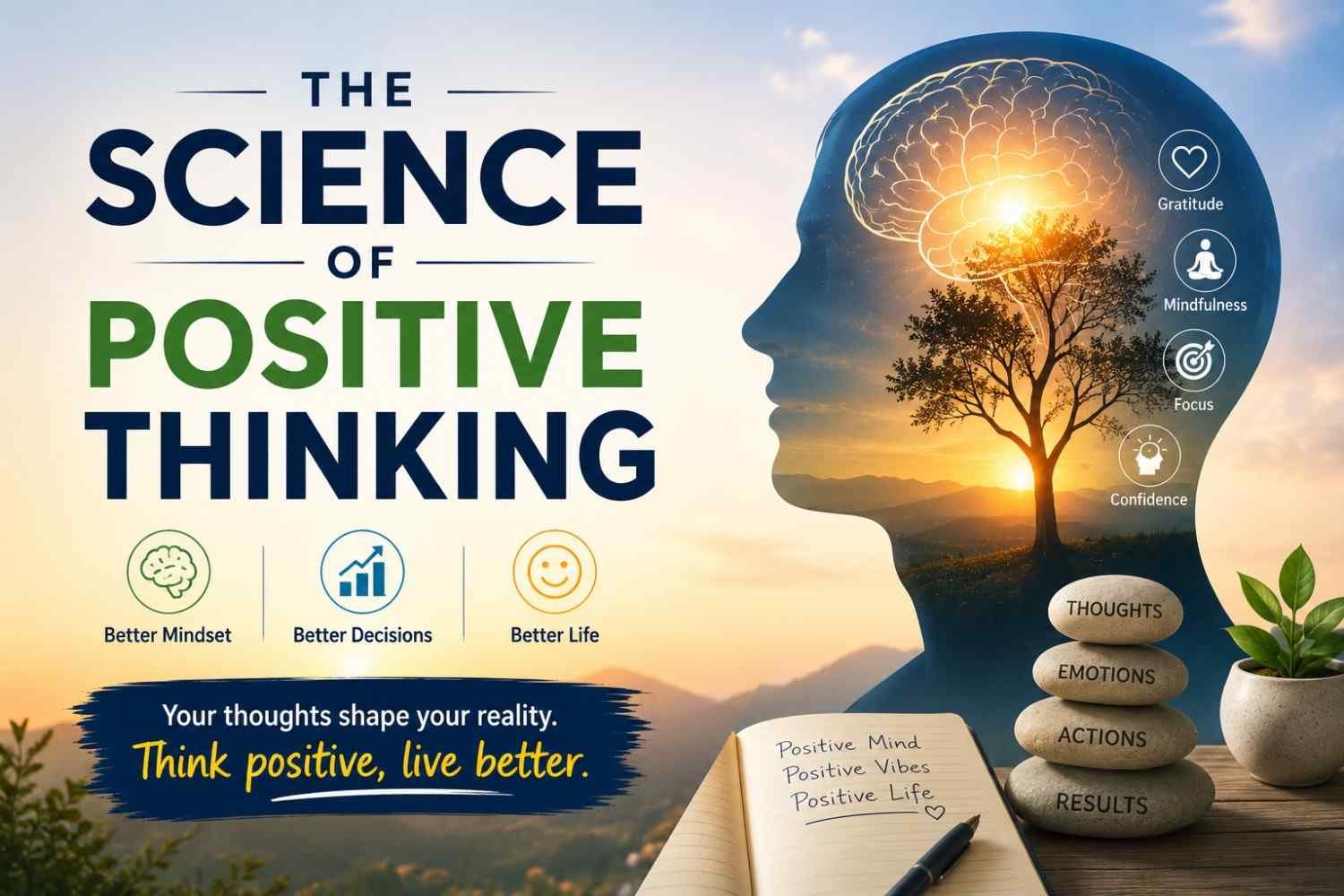
In this complete guide, we’ll dig into The Science of Positive Thinking. We’ll explain how optimism affects the brain and the body, we’ll cover the advantages backed by psychology, and we’ll share practical methods you can use to build a more positive mindset. Throughout the article, you’ll also see naturally woven in SEO keywords, Positive Mindset, Mental Health, Personal Growth, Self-Improvement, Stress Management, Emotional Well-Being, Healthy Habits, Mindfulness, Self-Confidence, Resilience, Brain Health, Motivation, Productivity, Happiness, and Psychology.
What Is Positive Thinking?
When we think about life in a way we try to be hopeful and confident. We do not think that everything will be perfect. We believe that we can handle the tough times. We know that we will have problems. We think that we can learn from them and become better people.
People who have a mindset know that things will not always be easy.. They do not let the problems scare them. Instead they try to find ways to solve them. This helps them stay positive even when things are tough.
Here are some things that positive thinking does:
- It helps us think about solutions of problems.
- It helps us be optimistic but realistic.
- It helps us feel better and be more balanced.
- It helps us feel more confident.
- It helps us make decisions.
- It helps us deal with times.
Positive thinking is about being strong and dealing with life in a way. It is not about being scared or feeling hopeless. Positive thinking is about responding to life in a way. Positive thinking is what helps us stay positive and move forward. That is what positive thinking is all, about.
The Psychology Behind Positive Thinking
Psychologists have long studied how thoughts influence emotions and behavior. Research suggests that our thought patterns shape how we interpret situations respond to stress and interact with others. When people consistently think positively their brains become more likely to recognize opportunities, achievements and recover from disappointments. This doesn’t eliminate challenges. It changes how those challenges are experienced. Positive thinking also encourages emotional responses.
Of becoming trapped in cycles of worry or self-doubt optimistic people often focus on actions they can take to improve their circumstances. This approach supports mental health and long-term emotional stability.
Psychological Benefits
- Improves regulation
- Encourages thinking
- Reduces worry
- Supports healthier relationships
- Increases motivation
- Strengthens resilience
How Positive Thinking Affects the Brain
The human brain constantly adapts through a process known as neuroplasticity. Repeated thought patterns strengthen neural pathways making those patterns more automatic over time.
When people regularly practice gratitude, optimism and encouraging self-talk they reinforce habits associated with hope and confidence. While this doesn’t remove emotions entirely it helps the brain respond more effectively to stressful situations.
Positive emotions are also linked with concentration, creativity and problem-solving. Than narrowing attention through fear optimism often broadens perspective making it easier to identify practical solutions.
Brain Benefits
- Supports neural connections
- Encourages flexible thinking
- Improves creativity
- Enhances focus
- Supports decision-making
- Contributes to long-term brain health
Positive Thinking and Mental Health
One of the most significant benefits of positive thinking is its impact on mental health. Optimistic people often cope better with stress because they focus on what they can control instead of dwelling on uncertainty. This doesn’t mean positive thinkers never feel sadness, frustration or disappointment.
Rather they tend to recover quickly and maintain hope during difficult times. Practicing optimism alongside coping strategies can improve emotional resilience and support overall psychological well-being.
Mental Health Benefits
- Reduces stress
- Improves emotional balance
- Encourages coping strategies
- Supports confidence
- Promotes calm
- Enhances well-being
The Connection Between Positive Thinking and Physical Health
The mind and body are closely connected. Long-term stress can affect sleep, energy, immune function and overall physical wellness. By reducing stress and encouraging healthier behaviors positive thinking may contribute to better physical health.
People with outlooks are also more likely to exercise regularly maintain healthy eating habits and follow medical advice creating additional health benefits over time. Positive thinking doesn’t prevent illness. It can encourage healthier daily choices that improve overall well-being.
Physical Health Benefits
- Supports heart health
- Encourages habits
- Improves sleep quality
- Increases energy levels
- Supports immune function
- Promotes wellness
Positive Thinking Improves Stress Management
Stress is a part of life but how we respond to it makes a significant difference. A positive outlook helps people interpret challenges as temporary and manageable than permanent and overwhelming.
Of focusing solely on what has gone wrong optimistic people often ask themselves what they can learn from the situation or what steps they can take next. This solution-oriented approach strengthens stress management while reducing exhaustion.
Healthy Stress Responses
- Focus on solutions
- Accept temporary setbacks
- Practice breathing
- Maintain perspective
- Ask for support when needed
- Continue moving
Positive Thinking Builds Self-Confidence
Confidence grows through repeated experiences of overcoming challenges. Positive thinking encourages people to believe in their ability to learn, adapt and improve than assuming failure is inevitable.
This healthier internal dialogue supports self-confidence while reducing unnecessary self-criticism. Of saying, “I can’t do this ” optimistic people are more likely to think “I can learn how to do this.”
Confidence-Building Habits
- Celebrate achievements
- Learn from mistakes
- Set realistic goals
- Practice encouraging self-talk
- Focus on progress
- Continue developing skills
Positive Thinking Strengthens Relationships
Optimism also affects the way people interact with others. Positive people often communicate constructively express appreciation more frequently and approach conflicts with greater patience.Healthy relationships benefit from empathy, kindness and open communication all of which are supported by a positive mindset.
Being optimistic doesn’t mean avoiding conversations. Instead it means approaching them with respect and a desire to find solutions.
Relationship Benefits
- Better communication
- Greater empathy
- Increased patience
- Stronger trust
- teamwork
- Supportive friendships
The Role of Gratitude in Positive Thinking
Gratitude is one of the simplest ways to strengthen a positive mindset. Of focusing only on whats missing gratitude encourages people to recognize what is already going well.
Research suggests that regularly practicing gratitude may improve well-being increase life satisfaction and reduce stress. Simple habits such as writing down three things you’re thankful for each day can gradually shift attention toward experiences.
Gratitude Practices
- Keep a gratitude journal
- Appreciate victories
- Thank people sincerely
- Reflect on experiences
- Celebrate personal growth
- Practice daily appreciation
Mindfulness and Positive Thinking
Mindfulness complements positive thinking by encouraging awareness of the present moment without harsh judgment. Than constantly worrying about the future or replaying past mistakes mindfulness teaches people to focus on what is happening right now. When combined with optimism mindfulness creates a mindset that supports emotional resilience and thoughtful decision-making.
Mindfulness Habits
- Practice deep breathing
- Spend time reflecting
- Observe thoughts without judgment
- Reduce digital distractions
- Focus on one task, at a time
- Enjoy moments
Positive Thinking and Productivity
Having an attitude usually makes Productivity better because people who are optimistic tend to work with more motivation and they keep trying harder. When things get tough they see these challenges as chances to get better of giving up.
This way of thinking helps people be more creative work with others and make progress all the time. Employers like people with an attitude because they make the workplace a healthier place to be.
Productivity Benefits
- focus.
- Greater motivation.
- Improved teamwork.
- Enhanced creativity.
- Stronger problem-solving.
- Increased resilience.
Common Myths About Positive Thinking
There are some ideas about Positive Thinking that stop people from really understanding what it means.
Myth 1: Positive Thinking means ignoring problems.
Actually Positive Thinking is about seeing problems and then finding good solutions.
Myth 2: People with an attitude are always happy.
Everyone feels sad or upset sometimes.. People with a positive attitude can deal with these feelings better.
Myth 3: Positive Thinking always leads to success.
To be successful you need to work plan well and keep trying. Positive Thinking helps with these things but it does not guarantee success.
Myth 4: You should never have thoughts.
It is normal to have thoughts sometimes. The important thing is to learn how to deal with them in a way.
To start thinking you need to practice it every day not try to make big changes all at once.
Daily Habits
- Practice being thankful for what you have.
- Exercise every day.
- Spend time with people who support you.
- Read books that inspire you.
- Set goals that you can really achieve.
- Celebrate the progress you make.
- Practice being mindful.
- Do not say mean things to yourself.
Making changes every day can lead to big changes over time.
When you are trying to be more optimistic do not pretend that everything is perfect.
Mistakes to Avoid
- Ignoring how you really feel.
- Thinking you will see results away.
- Comparing yourself to others all the time.
- Using affirmations that’re not realistic.
- Avoiding talks that might be difficult.
- Thinking that when things go wrong they will always go wrong.
Being optimistic in a way means being hopeful but also realistic, about life and Productivity.
Conclusion
Understanding The Science of Positive Thinking shows that optimism is way more than just “thinking happy thoughts.” It kinda acts like a workable mental stance, grounded in psychological research, and it changes how you deal with setbacks , how you handle stress , how you relate to other people, and how you chase personal ambitions. When you develop a Positive Mindset, you also strengthen Resilience, try Mindfulness more often , and keep putting attention on Personal Growth, you can notice improvements in both your emotional state and physical well-being too.
Positive thinking doesn’t wipe out life’s difficulties, and it doesn’t promise success either. Instead, it gives you the kind of confidence, outlook , and drive that helps you move through problems with better skills. When you combine it with healthy habits, realistic expectations , and steady effort, optimism turns into a strong instrument for building a happier, healthier, and more satisfying life.
Also, changing your mindset tends to happen slowly. So start small, with daily habits like gratitude, encouraging self-talk, and staying on solutions rather than problems. Little by little, these simple practices can reshape the way you process things, so you meet life with more confidence, steadier balance, and yeah more optimism as well.
Frequently Asked Questions
1. What is positive thinking?
Positive thinking is the practice of approaching situations with realistic optimism, focusing on solutions, opportunities, and constructive actions instead of becoming overwhelmed by challenges.
2. Can positive thinking improve mental health?
Yes. A healthy Positive Mindset can support better Mental Health by reducing stress, encouraging resilience, improving emotional balance, and promoting healthier coping strategies.
3. Does positive thinking affect physical health?
Positive thinking may encourage healthier habits, improve stress management, support better sleep, and contribute to overall physical well-being when combined with a healthy lifestyle.
4. Is positive thinking the same as ignoring problems?
No. Positive thinking acknowledges challenges while encouraging practical problem-solving and maintaining hope instead of denying reality.
5. How can I become a more positive thinker?
Develop daily habits such as practicing gratitude, using encouraging self-talk, exercising regularly, spending time with supportive people, practicing mindfulness, and focusing on continuous personal growth.