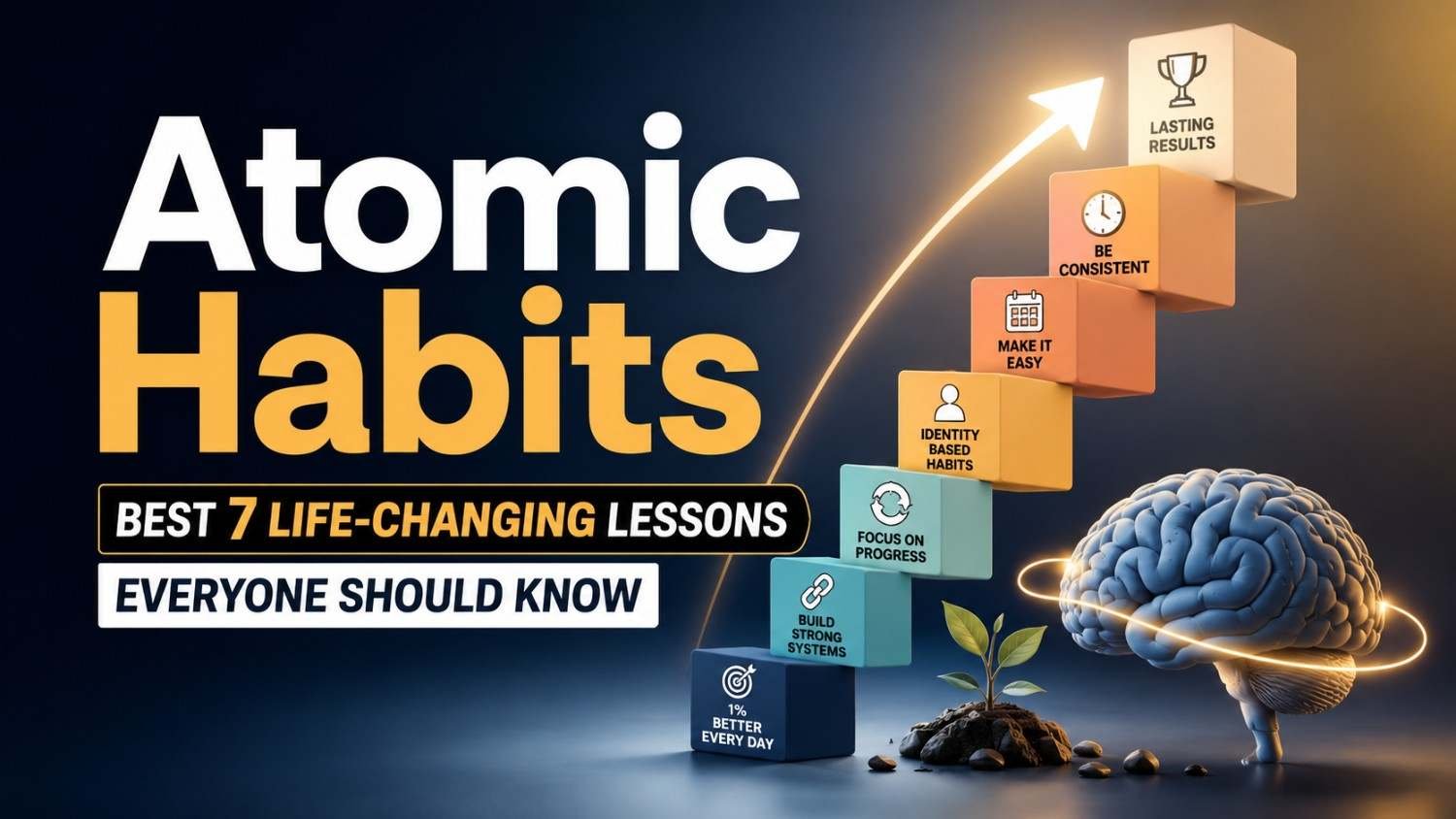
Lots of people say they want to change, but then they go at it with these sort of dreamy, unrealistic expectations. Like, they decide they will exercise every single day, read dozens of books, be super productive, or somehow rebuild their whole routine overnight. For a little while it feels easy, then the original spark fades and suddenly those big plans become harder to keep going. The thing is , it is not always about having zero discipline, or “being weak”. In many cases people just ignore how strong tiny behaviors really are when they are repeated over time. That’s basically the main point in Atomic Habits, James Clear’s very talked about book, about building better habits and cutting out the ones that mess you up.
The tricky part is that knowing what to do is not the same as doing it consistently, like in real life, day after day. Someone might clearly understand that exercise, reading, saving money, or deep focused work can improve everything , yet still can’t reliably turn those ideas into real routines. Clear’s method is less about waiting for motivation to show up, and more about making the better actions easier to repeat, even when you are not feeling fired up. The lessons inside Atomic Habits offer a down to earth guide for seeing how behavior works, adjusting your surroundings, and creating systems that actually hold up over the long term. Here are seven of the most useful lessons readers can try out in everyday life.
Understanding the Core Idea Behind Atomic Habits
Before jumping into the seven lessons, it helps to get what Clear means when he talks about an “atomic” habit. Basically, it’s about habits that are so tiny they look almost forgettable, yet they can still create real momentum if you repeat them long enough. A minor action might feel flat on one day, but its repeated echo can grow into something substantial. Like reading just two pages. On its own, it probably won’t feel like a life changing event. But if you keep doing it, you can end up with a steady reading rhythm that, later on, turns into dozens of finished books. The same pattern shows up in exercise, saving, learning, work, and even personal development. So the point isn’t dramatic change overnight. It’s more about putting together systems that make good actions easier to run again and again.
Lesson 1: Small Improvements Can Produce Remarkable Outcomes
One of the most striking ideas in Atomic Habits, is that tiny improvements can build on themselves over time. Many people chase dramatic shifts because the quick impact feels rewarding in the moment. Yet a lot of meaningful progress tends to arrive slowly. Someone who gets a little better each day might not spot a big difference after a week. But after a few months, the gathered effect becomes much more obvious. That’s why consistency often beats those occasional surges of motivation.
How to apply this lesson
Start by picking one behavior that would, like honestly, make your life better if you did it again and again. Instead of trying to overhaul your whole routine in one go, just shrink the behavior down a bit. Make it so small and so doable that it almost feels, I don’t know, inevitable.
For example:
- Read two pages instead of planning to finish a chapter.
- Walk for ten minutes instead of committing to an intense workout.
- Save a small amount regularly instead of setting an unrealistic savings target.
- Spend five minutes organizing your workspace.
The goal here is to have starting be simple enough that your resistance stays pretty low, like it can’t really fight you much.
Lesson 2: Focus on Identity, Not Just Goals
Goals are basically what you want to reach, identity is more like the person you want to be. That difference is one of those super strong ideas linked with identity based habits. Like, instead of only thinking, “I want to read ten books this year,” you can sort of shift it to “I am turning into a reader.” And instead of saying “I want to exercise 100 times,” you can reframe it as “I am the kind of person who cares for my physical fitness.” The second way ties the actions to your sense of who you are, sort of makes it feel more personal.
Why identity matters
When a habit starts connecting itself to how you see yourself, it’s often easier to stick with it. Every single repetition becomes proof, almost like evidence that backs up that identity. Reading on a regular basis builds up the identity of being a reader. Working on a skill reinforces the identity of being someone who truly values learning. Also, this doesn’t mean just repeating nice affirmations. The identity gets stronger when you actually do the behavior, not merely when you talk about it, or think about it.
Lesson 3: Make Good Habits Obvious, Attractive, Easy, and Satisfying
Clear presents a framework commonly summarized through four stages of habit formation.
A useful habit should become:
Obvious → Attractive → Easy → Satisfying
These principles explain why certain behaviors turn into automatic routines , while other ones just stay tricky. If you want to read more, say it’s like leaving a book beside your bed. That makes the whole thing visible. Picking a topic you actually like gives it pull and makes it feel desirable. Beginning with just a few pages makes it manageable, almost effortless. When you also track completed reading sessions it can make the effort feel rewarding. This same kind of structure can be reshaped for lots of other parts of life.
A practical example
Let’s say you want to exercise in the morning. Make it obvious by getting your workout clothes ready the night before. Make it attractive by choosing an activity you enjoy, not something you endure. Make it easy by starting with a short session instead of going all in immediately. Make it satisfying by writing down your progress. Small tweaks in your surroundings can strongly nudge the behavior so it’s more likely to show up.
Lesson 4: Your Environment Can Shape Your Behavior
A lot of people think habits are mainly steered by willpower, but honestly it’s often more complicated, the world around you , can tug at what you notice , and what you end up doing. Like if your phone sits right next to you while you’re working, you might find yourself checking it again and again. And if the healthier snack options are within reach, you’ll probably grab those more often. Or if a book is just sitting in sight on your desk then starting to read can feel almost effortless, even if you swear you don’t have time. So yeah habit building strategies should really bring in environmental design.
Change your surroundings first before blaming your discipline
If you want less distraction, push the distracting devices away from where you work. If you’re trying to train a skill, keep what you need close at hand, easy to reach. And if your plan is to read before bed, put the book where your phone would normally be, like right there where your hand goes automatically. The point isn’t to depend on nonstop self control. The point is to arrange your surroundings so the good choices become simpler and the not-so-good ones turn into a hassle , less convenient to do.
Lesson 5: Habit Stacking Can Make New Behaviors Easier
One practical technique, kinda discussed in the book, is habit stacking. The idea is pretty straightforward: you connect a fresh habit to one that you already do. Instead of trying to recall a completely new behavior at some random moment, you attach it to something you perform almost on autopilot , like it is just part of your routine.
For example:
“After I make my morning coffee, I will read for five minutes.”
“After brushing my teeth, I will spend two minutes stretching.”
“After lunch, I will review my task list.”
This works because the existing behavior becomes a reminder for the new behavior.
Why habit stacking is useful
Established routines already have a place in your day. When you add a new behavior to one of those routines, you end up reducing the need to remember when to do it. That’s why habit stacking, the one you see in Atomic Habits, can be especially useful for beginners who kind of fight with consistency, you know.
Lesson 6: Make Bad Habits Less Attractive and Less Convenient
Building good habits is only half of the whole equation. If you really want to shift your actions, you might also need to make the unwanted habits feel more annoying, or at least harder to choose. Say you keep losing time scrolling on your phone while you work. Instead of telling yourself over and over “don’t check it”, create some friction. For instance, move the phone away from your desk, turn off unnecessary notifications, log out of distracting applications, or set up website restrictions during deep focus sessions. The main idea is simple: increase the effort required to do the thing you do not want to do.
Think in terms of friction
Good habits should take fewer steps. Bad habits, on the other hand, can require more steps. This method doesn’t rely entirely on willpower. Example: keeping fruit where you can see it, and putting lower quality snacks somewhere inconvenient, changes your surroundings without forcing you to make the same decision again and again.
Lesson 7: Consistency Matters More Than Perfection
Many people abandon a habit because they miss one day.
They think, “I failed, so the routine is ruined.”
All or nothing thinking can turn a minor slip into this bigger long term setback. Instead, a better way is to get back to the behavior pretty much ASAP. If you miss just one workout, it doesn’t wipe out what you already built. Skipping one reading session does not mean you’re suddenly not a reader anymore. Really the key question isn’t, if you will miss a day at some point, but if you can return to the habit, and keep going, rather than letting one missed chance turn into a permanent pattern.
Build a recovery mindset
If something interrupts your routine, ask:
“What is the smallest version of this habit I can do today?”
That question can help preserve continuity.
Consistency does not mean perfection. It means repeatedly returning to the behavior.
Why Motivation Alone Is Not Enough
Motivation can be useful when you start something new, but honestly it is rarely consistent. Some mornings you might feel energetic and focused. Other days you feel tired, distracted, or just busy. If your whole habit setup is tied to motivation only, then it becomes kind of fragile, like it swings with every mood. That is why the ideas in Atomic Habits by James Clear focus more on systems and surroundings. A routine that’s designed well reduces the number of choices you have to make. Instead of asking every single morning whether you “feel like” working out, reading, or studying, you build a steady process. Then the behavior becomes easier to kick off without all that back and forth.
How to Apply Atomic Habits to Your Daily Routine
You do not need to completely redesign your life to use these ideas. Choose one area where you want improvement.
It could be:
- Health.
- Reading.
- Learning.
- Productivity.
- Personal finance.
- Sleep.
- Exercise.
- Organization.
Then, pick one tiny behavior that supports that whole area. Make it super obvious, easy to start, attractive, and honestly satisfying to do. Like if your aim is to read more, just put a book beside your bed, begin with five pages, choose a topic you actually enjoy, and then note each completed session. The point is to build a repeatable setup, not to chase some dramatic quick win that fades fast.
Atomic Habits and the Power of Systems
Goals are helpful, yeah. They give direction. But what you keep doing comes from the systems. A goal might be to slim down, learn a language, grow a business, or finish a book. The system is basically the everyday actions that carry you toward that result. For instance, if someone wants to write a book, they could set a system where they write 300 words each morning. If someone wants to learn a language, they might do practice for 15 minutes after breakfast. If someone wants to get better with money, they could transfer a fixed amount into savings automatically. These routines, systems, and little setups turn big vague ambitions into behaviors that repeat without all the drama.
Why Small Habits Are Easier to Maintain
Big commitments can, sort of create a psychological resistance. Like if a new habit needs an hour each day, then missing a single session can feel… really significant even though it’s only one day. But a five minute habit feels way more “restartable” . And no, this doesn’t mean you should stay stuck with five minutes forever. The small version is more like an entry point. Once the behavior becomes familiar, you can usually grow it , meaning you can increase the time or make it a bit harder without so much friction. Usually the first target isn’t maximum performance. It’s more about locking in the behavior , and getting it to show up consistently.
How to Break the Cycle of Bad Habits
Breaking a bad habit requires understanding what triggers it.
Ask yourself:
When does the behavior usually happen?
Where am I when it happens?
What emotion or situation precedes it?
What reward am I seeking?
For example, someone might automatically check social media when work becomes stressful or difficult . But the real payoff might not be the social media, not exactly. It could be a quick relief from an uncomfortable task. If you can spot the trigger, it helps you shape a better alternative. Instead of only deleting the behavior, replace it with a healthier response to the same cue.
Common Mistakes When Building New Habits
Trying to Change Too Many Things at Once
Attempting ten new habits simultaneously can create unnecessary pressure. Start with one or two behaviors that matter most.
Making the Habit Too Difficult
A complicated routine creates more opportunities to quit. Simplify the starting point.
Depending Entirely on Motivation
Motivation changes. A reliable environment and routine can provide more consistency.
Expecting Immediate Results
Many behaviors produce delayed rewards. Give the system enough time to become established.
Treating One Missed Day as Failure
A missed day is an interruption, not proof that the habit cannot work.
The Bigger Lesson From Atomic Habits
The most important lesson is perhaps that meaningful change does not always look dramatic. A person can change their life through hundreds of tiny decisions that seem kind of insignificant, on their own. You might read a few pages, take a short walk, save a small amount, practice a skill, prep tomorrow’s priorities, or remove one distraction, and none of that feels revolutionary. Still, those repeated actions mold routines, routines nudge identity, and identity ends up steering the choices we keep making. so, those small daily improvements for success can be way more sustainable than waiting for an occasional burst of extreme effort.
Conclusion
Atomic Habits gives a practical way to think about personal progress, without needing dramatic transformations or constant motivation. Its biggest takeaways are starting with small upgrades, building habits around identity, designing environments that actually help, stacking habits, reducing friction, making unwanted behaviors harder, and coming back quickly after setbacks. The deeper point feels like lasting change comes from repeated actions rather than one-time intensity. When you focus on the system, and make good behaviors easier to repeat, anyone can slowly build routines that back the person they want to become.
Frequently Asked Questions
1. What is the main lesson of Atomic Habits?
The central idea is that small, consistent improvements can compound over time and create meaningful long-term changes in behavior and results.
2. What are the four laws of behavior change?
The framework focuses on making good habits obvious, attractive, easy, and satisfying, while making unwanted habits less obvious, attractive, easy, and satisfying.
3. What are identity-based habits?
Identity-based habits focus on becoming the type of person who naturally performs a behavior rather than focusing only on an external goal or outcome.
4. How can beginners start using Atomic Habits?
Start with one very small behavior, connect it to an existing routine, make the behavior easy to perform, and repeat it consistently before increasing its difficulty.
5. Can Atomic Habits help break bad habits?
Yes. The principles can be used to identify triggers, increase friction around unwanted behaviors, change the environment, and replace unhelpful routines with better alternatives.